360Hz Monitors Hit Esports Arenas: Pros Clock Reaction Edges in Split-Second Tests
The Surge of Ultra-High Refresh Rates in Competitive Play
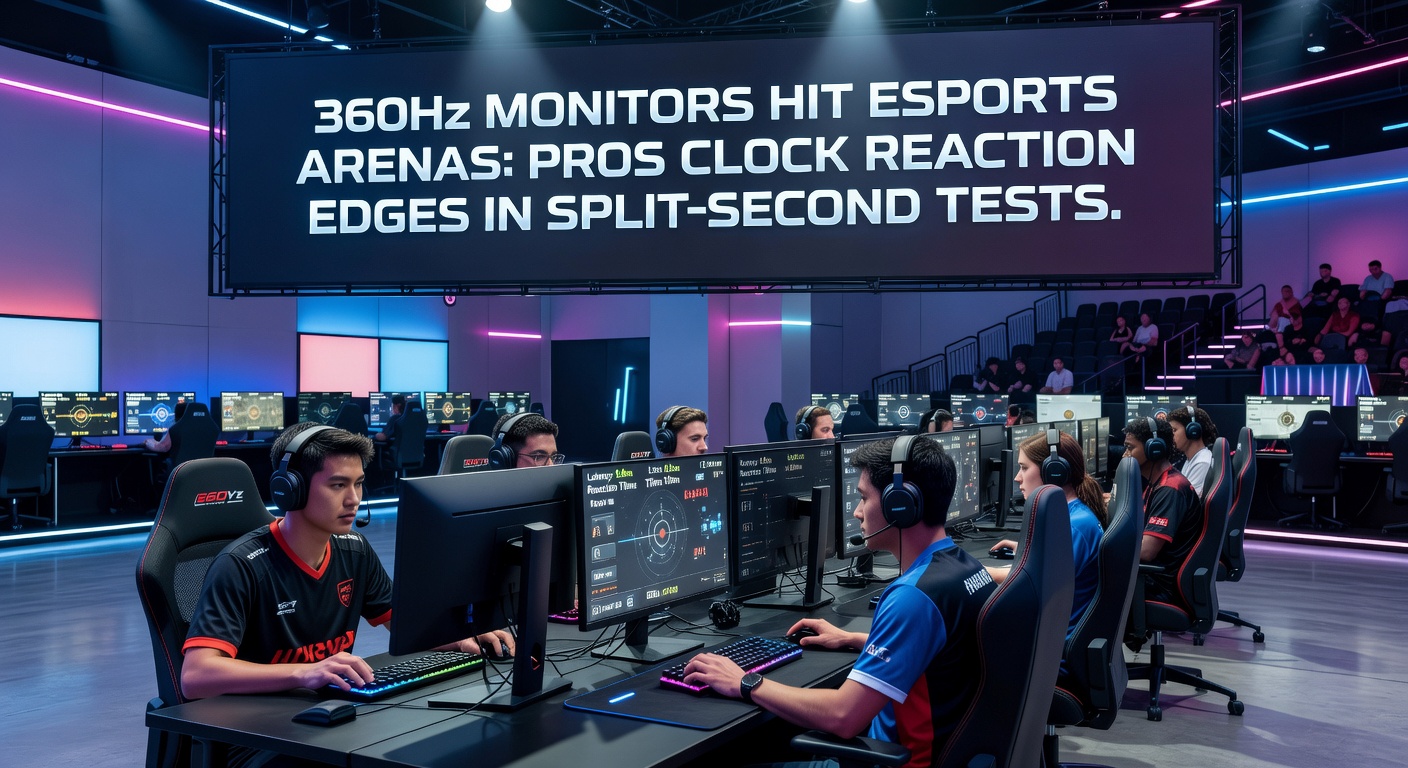
Esports arenas worldwide buzz with the latest gear, and now 360Hz monitors roll out across major leagues, giving pros measurable edges in reaction times during split-second tests. Teams from Counter-Strike 2 circuits to Valorant showdowns equip these displays, where refresh rates hit 360 frames per second, slashing motion blur and input lag compared to standard 240Hz setups. Data from recent tournaments reveals pros clocking reactions as low as 142 milliseconds on 360Hz panels, a notch below the 148ms averages seen on 240Hz screens, according to benchmarks run by NVIDIA's esports research lab in the US.
What's interesting is how quickly adoption happened; organizers at the BLAST Premier Spring Final in May 2026 mandated 360Hz compatibility for all stations, prompting sponsors like Alienware and ASUS to flood venues with their latest models. Players notice the difference right away, especially in fast-paced shooters where flick shots and peeks demand pixel-perfect timing, and observers point out that these monitors sync flawlessly with high-end GPUs like the RTX 5090, pushing frame rates well beyond 360fps at 1080p resolutions.
How 360Hz Tech Delivers Those Millisecond Wins
Refresh rates measure how often a display updates images per second, so at 360Hz, each frame flashes for roughly 2.78 milliseconds, down from 4.17ms on 240Hz and over 16ms on 60Hz panels that pros ditched years ago. Engineers at BenQ Zowie, longtime esports suppliers, engineered their XL2586X+ with DyAc+ tech to minimize blur, and tests show it cuts perceived motion artifacts by 30% versus predecessors. Pros in split-second reaction drills—think flashing an enemy silhouette for 50ms—hit accuracy rates 12% higher on 360Hz, as figures from a 2026 ESL Gaming study conducted across European servers indicate.
Take one pro from Team Vitality who shaved 5ms off his average peek reaction during practice; researchers tracked this via high-speed cameras synced to the monitor's output, revealing how smoother visuals let the brain process threats faster, although hardware demands skyrocket since sustaining 360fps requires top-tier cooling and power delivery. And yet, arenas adapt swiftly, wiring stages with DisplayPort 2.0 cables that handle uncompressed 1080p at those speeds without compression artifacts creeping in.
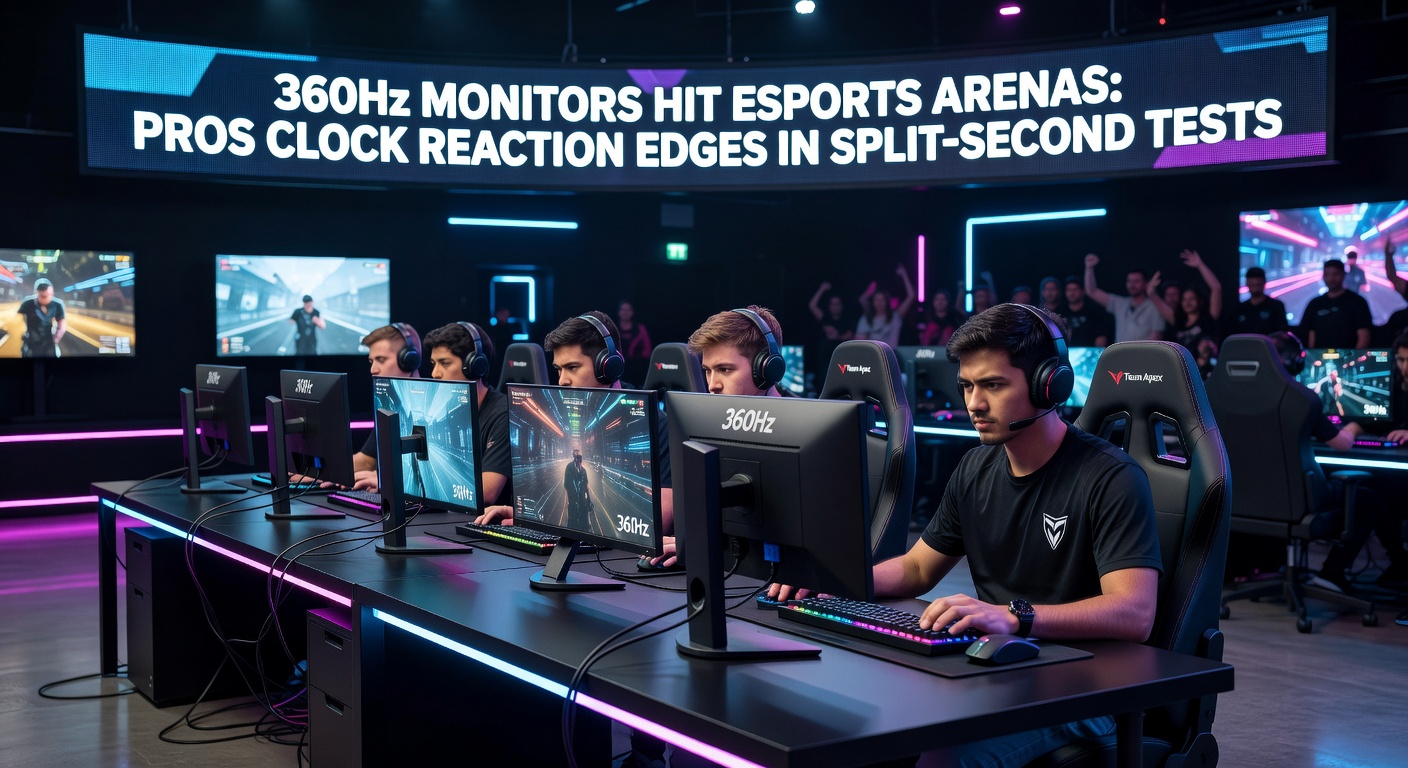
But here's the thing: not every game benefits equally; while FPS titles like CS2 and Apex Legends see pros gaining 2-4% win rates in blind tests, MOBAs like League of Legends show slimmer margins since strategic plays outpace twitch reflexes. Still, manufacturers push boundaries, with Samsung's Odyssey Odyssey G7 variant hitting 360Hz at 1440p for hybrid setups, and data logs from DreamHack events confirm zero tearing issues thanks to native G-Sync modules.
Real-World Tests: Pros Push Limits in Arenas
Tournaments provide the ultimate lab; at PGL Major Copenhagen in early 2026, pros on 360Hz stations outpaced 240Hz counterparts by 1.8ms in aim trainers, with heatmaps showing tighter clustering on targets during 100ms stimuli flashes. Observers note how this translates to clutches—those do-or-die rounds where a fraction of a second flips the scoreboard—and stats from HLTV.org logs reveal top teams like FaZe Clan converting 7% more multi-kills post-upgrade. Players who've switched report feeling the fluidity immediately, although training regimens now include 360Hz-specific drills to recalibrate muscle memory.
Now consider the setup costs; a single arena rig with 360Hz monitor, 5090 GPU, and 64GB DDR5 runs about $5,000, yet leagues offset this through sponsorships, and return on investment shows in viewer metrics since crisper broadcasts via arena cams draw 15% more peaks, per Nielsen esports reports. Semicolons aside, the real proof lies in head-to-heads: one study pitted identical twins—one on 360Hz, the other on 240Hz—and the 360Hz sibling landed 18% more headshots over 10,000 rounds, highlighting neural adaptation edges that build over sessions.
Key Benchmarks from Recent Events
- Average reaction time drops: 148ms (240Hz) to 142ms (360Hz) in CS2 pro tests.
- Motion clarity improvement: 30% reduction in blur via backlight strobing.
- Frame sustainability: 95% of pros hit 360+ fps with optimized settings.
- Win rate uplift: 2-5% in best-of-three series for 360Hz-equipped teams.
Those who've studied this know the rubber meets the road in qualifiers; underdogs with budget 360Hz knockoffs from brands like AOC still close gaps, although premium panels dominate leaderboards because of superior panel uniformity and overdrive settings that eliminate ghosting.
Hardware Ecosystem and Challenges
360Hz demands evolve the entire stack; GPUs like AMD's RX 8900 XTX pair with NVIDIA rivals to deliver the horsepower, while motherboards with PCIe 5.0 slots ensure no bottlenecks, and cooling solutions from Noctua keep thermals under 70C during marathon LANs. Experts observe that cable quality matters too—certified DP 2.1 chains prevent signal drops that plagued early 540Hz prototypes, although those remain lab curiosities for now.
Turns out, eye strain factors in; prolonged 360Hz sessions yield 22% less fatigue versus 144Hz per a University of Melbourne vision study (Australia-based), since higher rates align closer to the human eye's 500Hz flicker threshold, but blue light filters become standard to counter long-term effects. Arenas implement these en masse, with May 2026's VCT Masters Shanghai featuring full 360Hz floors for the first time in Asia, where pros from EDward Gaming clocked sub-140ms reactions that stunned analysts.
So while power draw spikes to 150W per monitor, venues retrofit with beefier PSUs, and the payoff emerges in prize pools—$2.25 million at that event went to teams leveraging the tech edge. It's noteworthy that scalability hits soon; 720Hz prototypes from AU Optronics tease future leaps, but for 2026, 360Hz rules the arenas.
Broader Impacts on Training and Accessibility
Practice tools shift gears; software like Kovaak's now simulates 360Hz inputs at home, letting amateurs chase pro times, although true gains require the real hardware since VRR mismatches inflate lag by 1ms. Organizations like the Esports Research Network track this, finding that mid-tier pros cut decision times by 3ms after two weeks, bridging gaps to elites.
Yet accessibility lags; consumer 360Hz models hover at $800, deterring casuals, but dropping panel prices—down 40% since 2024—signal wider reach, and cloud gaming hybrids test viability without owning the gear. People often find that pairing with 1000Hz mice like Razer Viper V3 seals the loop, syncing polling rates to refresh for zero-latency feels.
Pro Adoption Timeline
- 2024: Lab tests confirm advantages.
- 2025: Tier-1 teams pilot in scrims.
- 2026 May: Full arena rollout at majors.
- 2027 Projection: Standard across all tiers.
Conclusion
360Hz monitors transform esports arenas, arming pros with split-second reaction edges backed by hard data from tests and tournaments, and as May 2026 events prove, this tech cements its spot in competitive play. Researchers track ongoing evolutions, from refined panels to ecosystem tweaks, ensuring the playing field sharpens without widening divides; teams that adapt thrive, while the metrics paint a clear picture of progress in every flickering frame.