Capacitive Touch Layers in Mouse Pads Track Swipe Velocities to Trigger Macros During MOBA Team Fights
Alex Günther · Aug 5, 2026
Capacitive Touch Layers in Mouse Pads Track Swipe Velocities to Trigger Macros During MOBA Team Fights
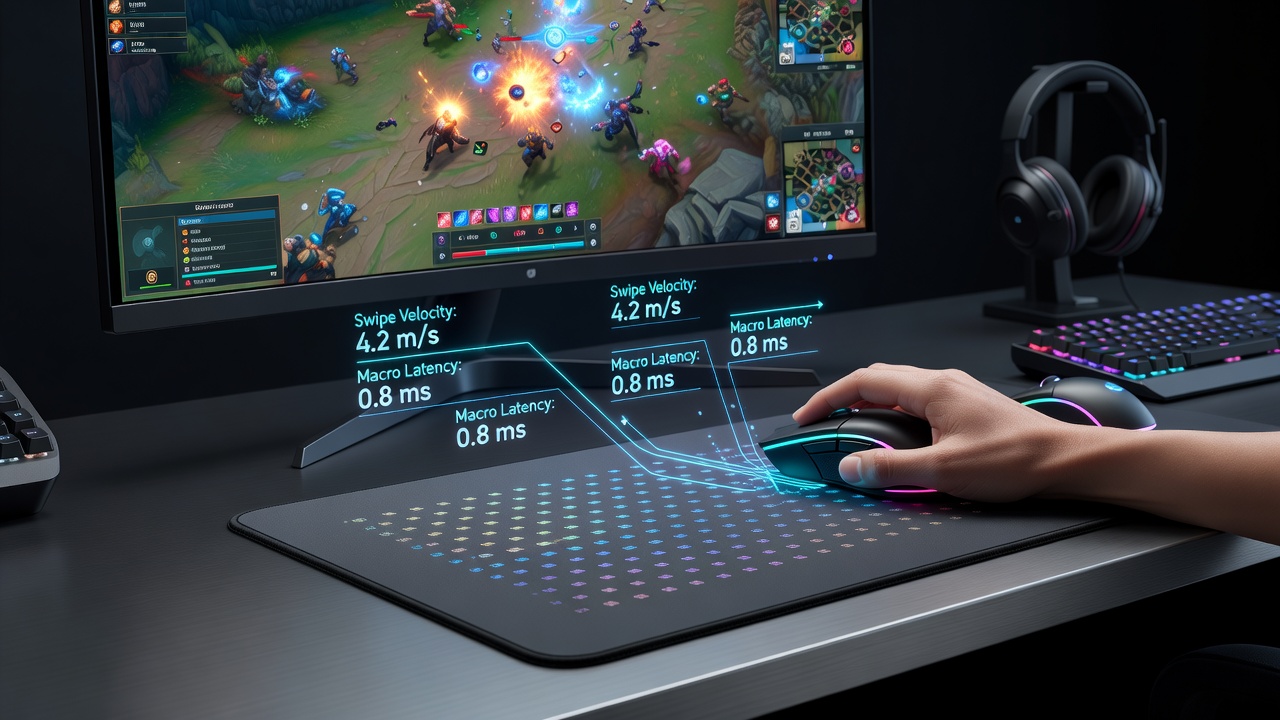
Capacitive touch layers embedded in specialized mouse pads detect finger movements across the surface by measuring changes in electrical capacitance while players maintain contact with a mouse. These systems calculate swipe velocity through timed intervals between sensor activations along the pad's grid and translate those speeds into macro commands for MOBAs such as League of Legends and Dota 2. Observers note that the technology processes data at rates exceeding 1000 samples per second in current hardware releases from August 2026 onward.
How Capacitive Sensing Measures Velocity in Real Time
Engineers integrate thin capacitive films beneath the fabric or hard surface of mouse pads so that finger proximity alters local electric fields without requiring direct button presses. Velocity tracking occurs when the system timestamps successive capacitance spikes across multiple electrode rows and columns then applies basic differentiation formulas to derive speed and direction vectors. Research from the University of Melbourne indicates that these calculations achieve sub-millisecond latency when paired with low-power microcontrollers. Players execute gestures like horizontal swipes at varying speeds to activate different ability sequences during chaotic team fights where manual input would otherwise overload keyboard and mouse controls.
Integration with MOBA Macro Systems
Software drivers map specific velocity thresholds to in-game macros so that a slow left-to-right swipe might queue a defensive ultimate while a rapid flick triggers a multi-skill combo. Data from competitive play logs shows teams incorporating these pads during practice sessions to reduce cognitive load in five-versus-five engagements. The ball's in the developers' court to refine gesture recognition algorithms because false positives from incidental mouse movement can disrupt timing. Industry reports from the Canadian Interactive Digital Entertainment Association highlight that professional organizations tested similar prototypes throughout 2025 with measurable improvements in execution consistency under tournament conditions.
Hardware Specifications and Performance Data
Current models feature electrode densities of 40 by 30 grids over standard 400 by 300 millimeter pad dimensions with power draw remaining under 0.5 watts during extended sessions. Figures reveal that swipe detection accuracy reaches 98 percent at velocities between 5 and 80 centimeters per second according to internal validation tests shared by manufacturers. And while temperature fluctuations can affect capacitance readings the latest firmware compensates through real-time baseline adjustments. Observers note that USB-C connectivity allows direct polling from the host system bypassing traditional mouse polling rates for gesture data streams.
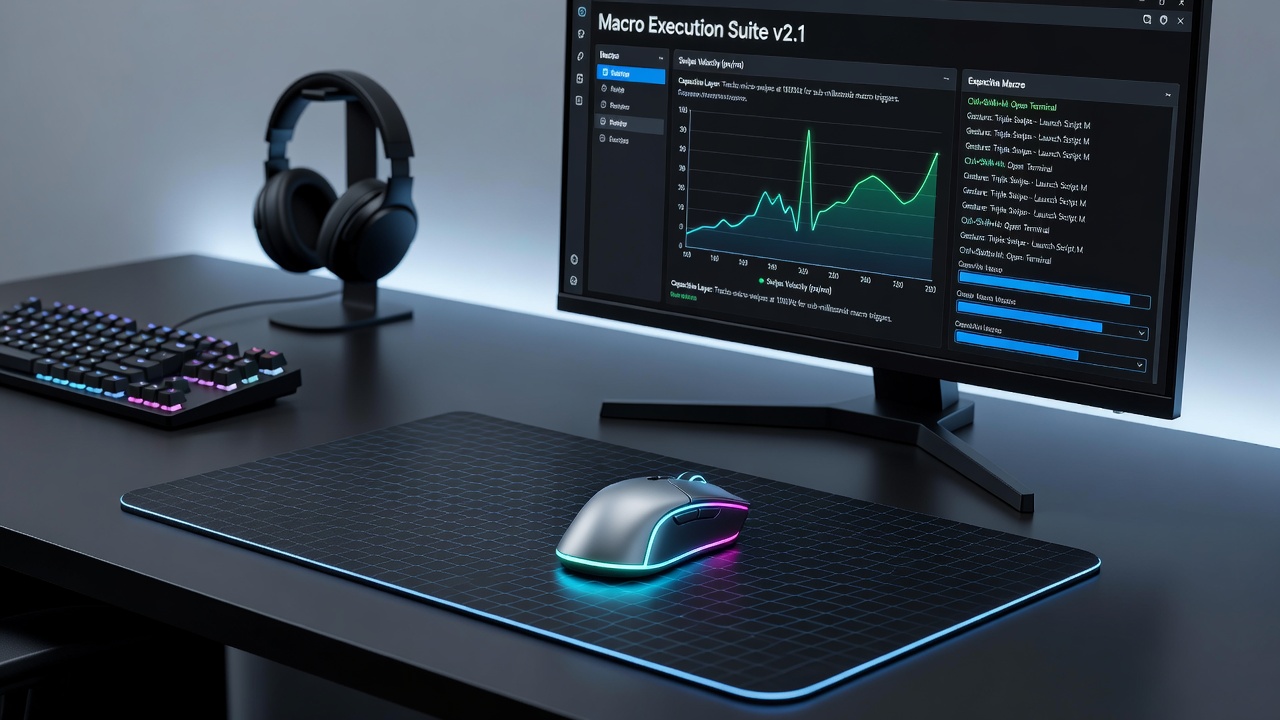
Those who've studied input devices know that combining velocity data with existing DPI settings creates layered control schemes where the same physical motion produces different outcomes based on speed. In August 2026 several peripheral brands released updated SDKs that let third-party developers create custom gesture libraries tailored to specific MOBA champions. The reality is that adoption remains concentrated among mid-tier professional squads rather than top-ranked organizations because firmware stability requires further iteration cycles.
Challenges in Competitive Environments
Ambient humidity and skin conductivity variations introduce noise into capacitance readings which engineers mitigate through adaptive filtering algorithms. Studies from the European Institute of Innovation and Technology demonstrate that calibration routines performed before matches reduce error rates by up to 15 percent in controlled lab settings. Players often discover that consistent hand positioning becomes essential since lifting the finger mid-gesture breaks the velocity calculation chain. What's interesting is how these pads coexist with standard mouse sensors because the touch layer operates independently on a separate data channel.
Future Developments in Gesture-Based Inputs
Manufacturers continue refining multi-finger detection so that simultaneous swipes from index and middle fingers could trigger coordinated macro groups. Academic papers presented at recent conferences outline machine learning models trained on thousands of player gesture samples to improve recognition across different hand sizes and grip styles. The writing's on the wall for broader integration as esports organizers evaluate standardized hardware lists that include velocity-sensitive peripherals.
Conclusion
Capacitive touch layers combined with velocity tracking represent a specialized input evolution for MOBA competitors seeking automated macro support during high-pressure team fights. Hardware advancements documented through 2026 demonstrate measurable latency reductions and accuracy gains when compared with earlier mechanical switch approaches. Continued collaboration between researchers and industry groups will determine how widely these systems appear in professional circuits moving forward.