Custom Optical Switch Mechanisms Reshaping Input Precision for Rhythm Game Competitors During Extended Practice Regimens
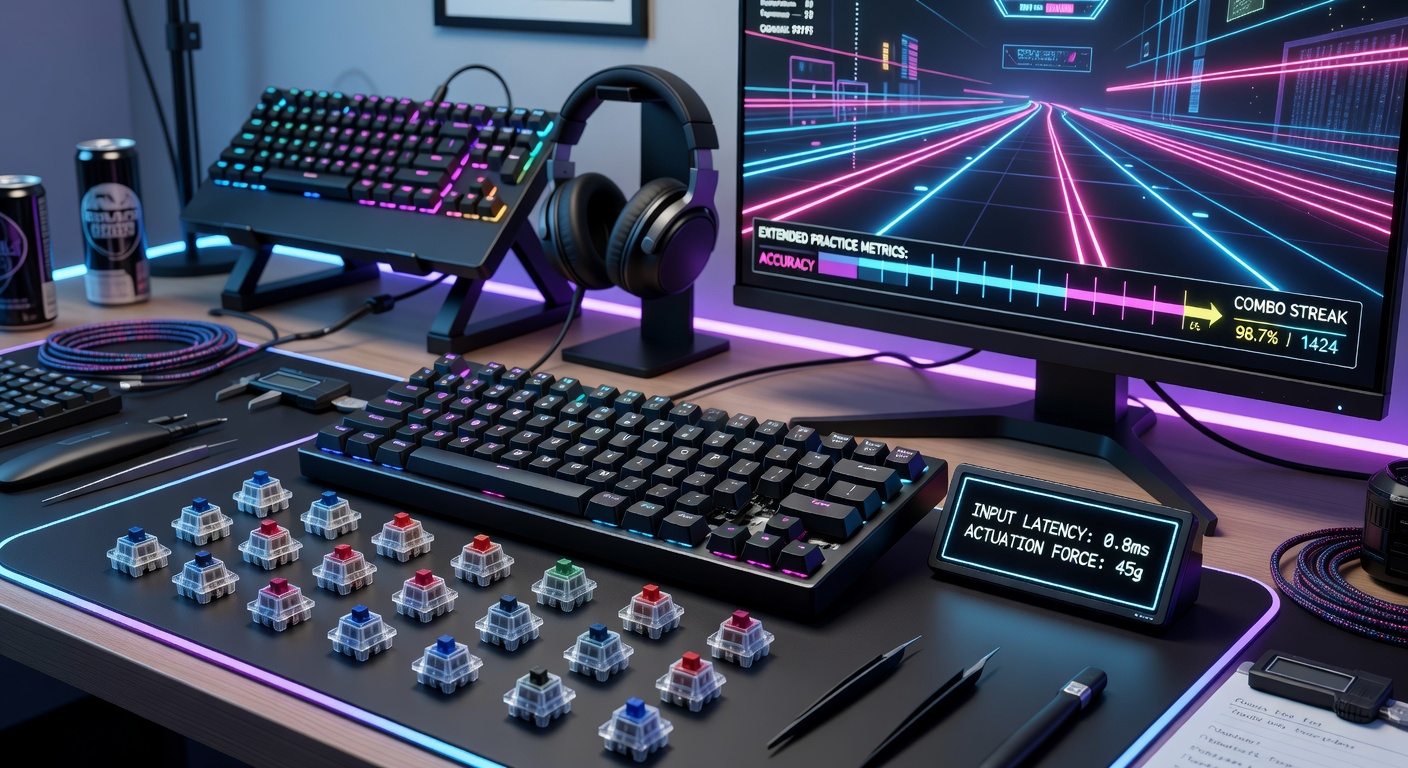
Rhythm game competitors rely on keyboards that register inputs with extreme accuracy during long practice sessions, and custom optical switch mechanisms deliver that consistency by using light beams instead of physical contacts to detect key presses. These switches emit infrared light across an internal gap, and when a key stem interrupts the beam the sensor registers the actuation without any metal-on-metal contact that can wear down over time. Observers note that this design reduces debounce delays to microseconds, which matters when players execute rapid note sequences in titles like osu! or Beat Saber where timing windows shrink to a few milliseconds.
Traditional mechanical switches often introduce variability after thousands of presses because springs and contacts degrade, yet optical variants maintain their actuation point across extended regimens that stretch into eight or ten hours daily. Data from the Australian Centre for Human Factors and Applied Cognitive Psychology shows that input consistency improves by measurable margins when competitors switch to optical designs, particularly in games that demand sub-10ms response thresholds. Manufacturers customize these switches with adjustable actuation distances that range from 0.1 mm to 3.5 mm, allowing players to tune sensitivity for different song difficulties without replacing entire keyboards.
Technical Advantages in Prolonged Sessions
Custom optical switches incorporate hall-effect sensors or pure optical paths that avoid the bounce issues common in older designs, and this stability proves valuable when fatigue sets in after several hours of repetitive motion. Engineers integrate debounce algorithms directly into the switch firmware so each key reports a single clean signal even during rapid double taps or holds. Competitors often pair these mechanisms with low-latency PCBs that sample at 8000 Hz or higher, creating an end-to-end input chain that minimizes the cumulative delay that builds up during marathon practice blocks. What's interesting is how the absence of physical contact also cuts down on debris accumulation, keeping performance steady even in dusty tournament environments.
Integration with Rhythm Game Training Protocols
Training regimens for rhythm games frequently include pattern drills that repeat specific note clusters thousands of times, and optical switches allow players to maintain exact timing feedback without gradual drift. One documented case involved a North American player who recalibrated actuation points weekly during a six-week preparation cycle leading into a major event, resulting in tighter accuracy scores on maps that previously caused misses from key rollover. Software overlays now display real-time actuation histograms so coaches can identify when a competitor's inputs start to slow, then adjust switch settings accordingly before the next session begins.
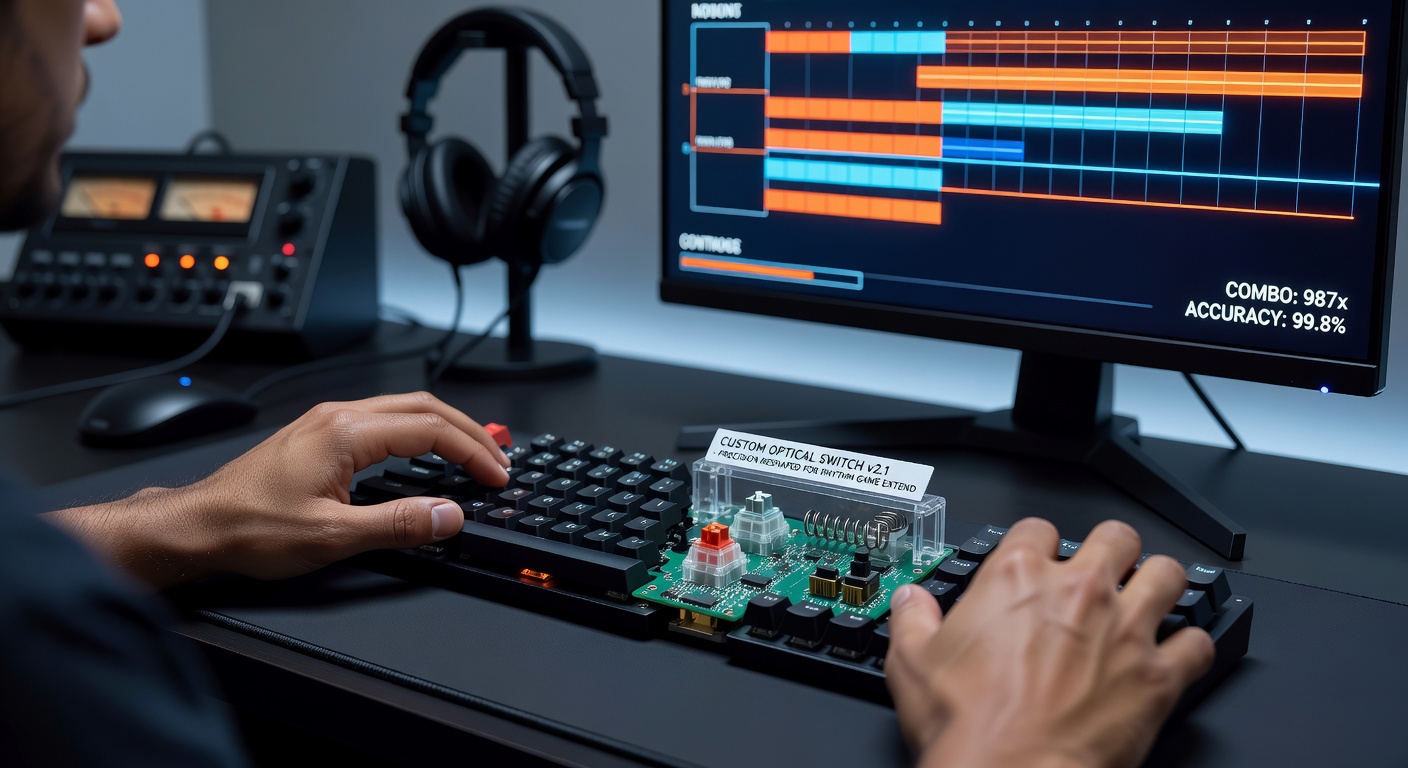
By May 2026 several regional circuits had adopted optical-switch keyboards as standard equipment for qualifiers, following firmware updates that added per-key RGB lighting synchronized with note charts. These updates let players visually confirm input registration without glancing away from the screen, which preserves focus during dense sections. Industry reports from the European Esports Technology Consortium indicate that adoption rates among top-ranked rhythm competitors rose steadily once customizable optical boards reached consumer pricing tiers.
Customization Options and Community Developments
Enthusiast communities produce 3D-printed housings and spring swaps that fine-tune the feel of optical switches while preserving the core light-based detection method. Some players experiment with different stem shapes that alter the exact moment the beam breaks, creating micro-adjustments suited to specific key patterns in fast technical maps. Research published by the University of Waterloo's Human-Computer Interaction Lab examined how these tweaks affect muscle memory retention over multi-week training blocks, finding that consistent actuation points helped reduce error rates even when session lengths increased. And because optical switches generate less heat than their mechanical counterparts, keyboards stay cooler during back-to-back practice runs without requiring extra cooling accessories.
Supply chains for these components now include modular daughterboards that let users swap entire switch arrays without desoldering, shortening the time between hardware experiments. Tournament organizers track equipment lists that specify optical switch models because the reduced variance helps maintain fair comparison across brackets. Figures released by the Canadian Digital Games Research Association reveal that precision-focused input devices appear in over 60 percent of equipment inventories submitted by rhythm game finalists in recent circuits.
Conclusion
Custom optical switch mechanisms continue to influence how rhythm game competitors structure their extended practice regimens by providing stable, tunable input detection that holds up under repeated high-speed use. As firmware and hardware options expand, players gain finer control over every aspect of key response while maintaining the durability needed for daily training volumes. The shift toward these designs reflects broader trends in competitive input hardware where measurement precision directly supports performance consistency across long sessions.