DirectStorage API Implementations Reducing CPU Bottlenecks During Asset Streaming in Large-Scale Multiplayer Environments

DirectStorage represents a Microsoft-developed API that allows games to stream assets directly from storage devices to the GPU while bypassing traditional CPU involvement in data decompression and transfer tasks. This approach addresses longstanding limitations in asset loading pipelines that have constrained performance in expansive multiplayer titles where numerous players interact simultaneously across shared virtual worlds. Developers integrate the technology through DirectX 12 Ultimate frameworks and compatible hardware configurations that support high-speed NVMe drives.
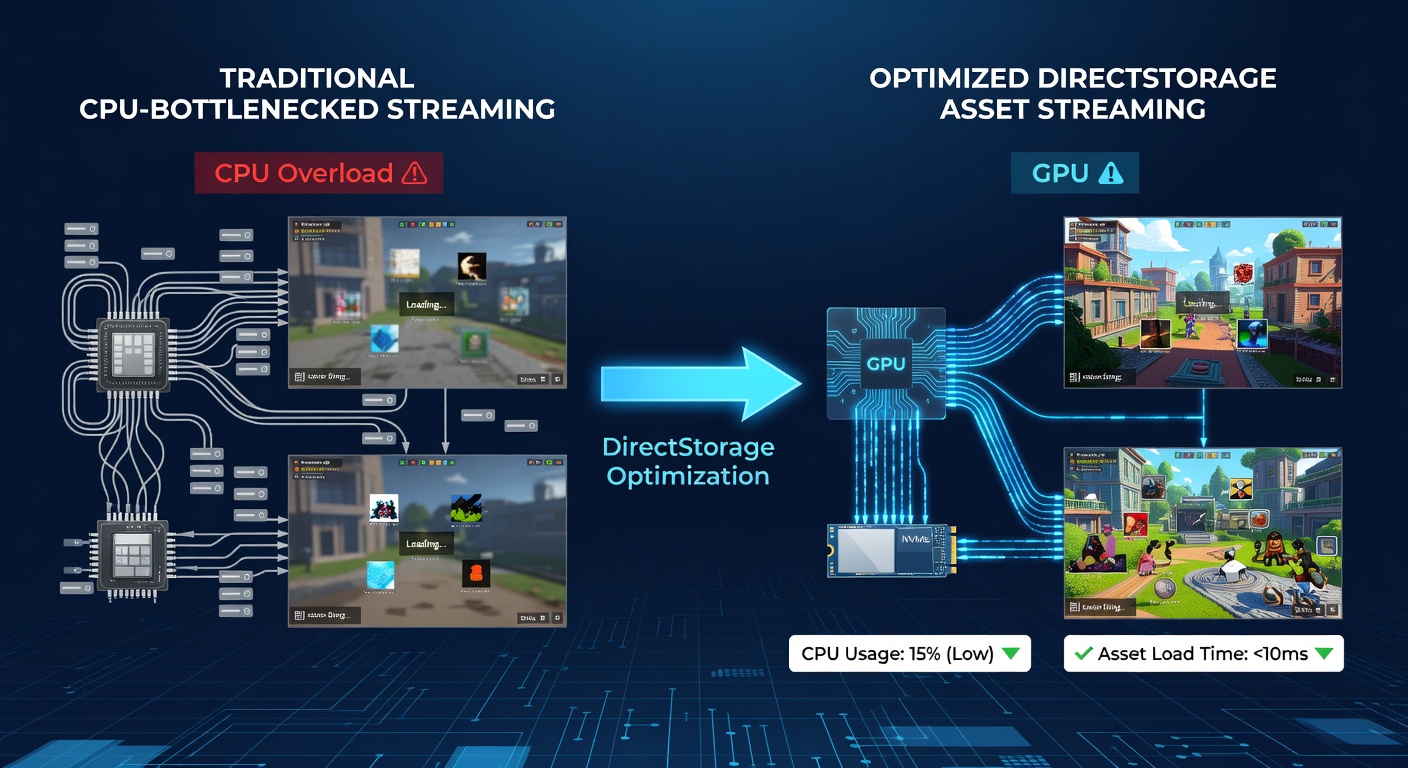
Traditional asset streaming relies on the CPU to handle decompression routines and memory management operations before data reaches the graphics processor. In environments supporting hundreds of concurrent users this creates measurable delays as the processor juggles multiple requests for textures, models, and audio files. Research indicates that such bottlenecks intensify during peak activity periods when synchronized events trigger widespread asset demands across the network.
Technical Mechanisms Behind CPU Offloading
The API introduces a dedicated decompression stage that operates on the GPU itself through hardware-accelerated algorithms. Data moves from storage in compressed form and undergoes processing without routing through system RAM intermediaries controlled by the central processor. This pathway reduces latency by eliminating context switches and cache contention that previously occurred during high-volume streaming operations.
Implementation requires game engines to adopt specific command queues that align with DirectStorage specifications. Studios update their asset pipelines to include GPU-compatible compression formats such as those based on LZ4 variants or custom block codecs designed for parallel execution. Hardware support extends across recent NVIDIA and AMD graphics cards that feature dedicated decompression units alongside their shader arrays.
Applications in Multiplayer Scenarios
Large-scale environments like persistent online worlds benefit when multiple clients request overlapping assets during dynamic encounters. Studies from industry testing facilities reveal reductions in frame time variability when DirectStorage handles streaming loads that would otherwise saturate CPU cores dedicated to simulation logic. Network synchronization threads gain additional headroom because fewer cycles are diverted to storage management duties.
One notable deployment occurred in titles updated around June 2026 where server-side asset prediction algorithms paired with client-side DirectStorage queues to preload regional map sections. This combination allowed smoother transitions between zones as players traversed expansive battlefields without encountering hitching from on-demand loads. Observers note improved consistency in 64-player and larger sessions compared to prior engine versions reliant on CPU-centric methods.
Hardware and Software Ecosystem Requirements
Adoption depends on storage devices meeting minimum throughput thresholds typically exceeding 3.5 GB/s sequential reads along with low queue depth latencies. Operating system updates from Microsoft have incorporated driver-level optimizations that further streamline the bypass path while maintaining compatibility with existing file systems. Game engines such as Unreal Engine 5 and Unity derivatives now ship with optional modules that expose DirectStorage controls to developers through visual scripting interfaces.
Regional testing programs conducted by organizations including the Interactive Software Federation of Europe have documented integration timelines across European studios. These efforts highlight standardized benchmarking protocols that measure CPU utilization deltas before and after API adoption in controlled multiplayer test beds. Similar initiatives from Australian research groups focus on regional network conditions that interact with streaming performance under variable latency conditions.
Performance Data and Implementation Patterns
Benchmark suites published through academic channels show average CPU load reductions ranging from 15 to 35 percent during intensive streaming phases depending on scene complexity and player density. These figures derive from controlled experiments that isolate storage operations from rendering and physics calculations. Titles leveraging the technology report sustained frame rates above 60 FPS in scenarios where previous versions dropped below thresholds during asset spikes.
Engineers at several major studios have adopted hybrid approaches that combine DirectStorage for primary texture streams with fallback paths for legacy hardware configurations. This strategy maintains broad compatibility while delivering optimized experiences on supported systems. Data from public repositories indicates increasing patch adoption rates throughout 2025 and into mid-2026 as middleware providers refine their integration layers.
Conclusion
DirectStorage continues to evolve through iterative updates that expand supported compression methods and refine error handling during interrupted network sessions common in multiplayer play. Its role in alleviating processor constraints supports larger world designs and denser player populations without proportional increases in hardware demands. Ongoing refinements by platform holders and independent developers point toward broader standardization across console and PC ecosystems alike.