Exploring Bismuth Telluride Module Efficiencies for Thermoelectric Cooling in High-Performance Portable Consoles Under Continuous Online Multiplayer Loads
 Portable consoles designed for high-performance gaming face sustained thermal challenges during extended online multiplayer sessions, and bismuth telluride modules offer one avenue for active cooling in compact form factors. These modules operate on the Peltier effect, where an electric current drives heat transfer across semiconductor junctions without moving parts. Researchers have measured figure-of-merit values for bismuth telluride alloys typically ranging between 0.8 and 1.2 at operating temperatures around 300 K, according to material property databases maintained by national laboratories.
Material Properties and Module Construction
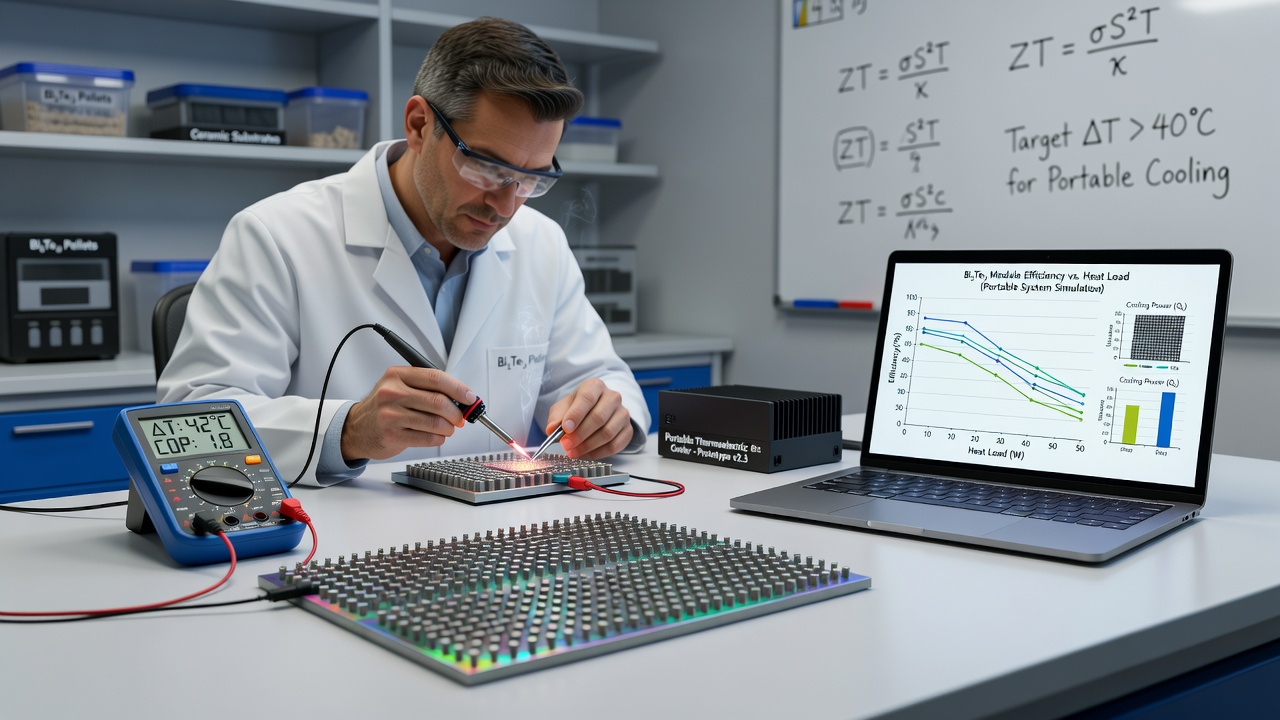
Bismuth telluride exhibits anisotropic thermal and electrical conductivity that engineers exploit when stacking p-type and n-type legs within a module. Module manufacturers arrange multiple couples in series electrically while keeping them in parallel thermally, which increases the overall cooling capacity at the expense of higher input voltage. Data collected through standardized test protocols show that module efficiency peaks when the temperature difference across the junctions remains below 40 degrees Celsius, a range frequently encountered in portable console heat sinks. Observers note that recent refinements in nanostructuring have raised the average ZT value by approximately 15 percent compared with bulk material produced five years earlier. These improvements translate into lower power draw for the same cooling load, an important consideration when battery capacity limits total system energy.Performance Under Sustained Multiplayer Loads
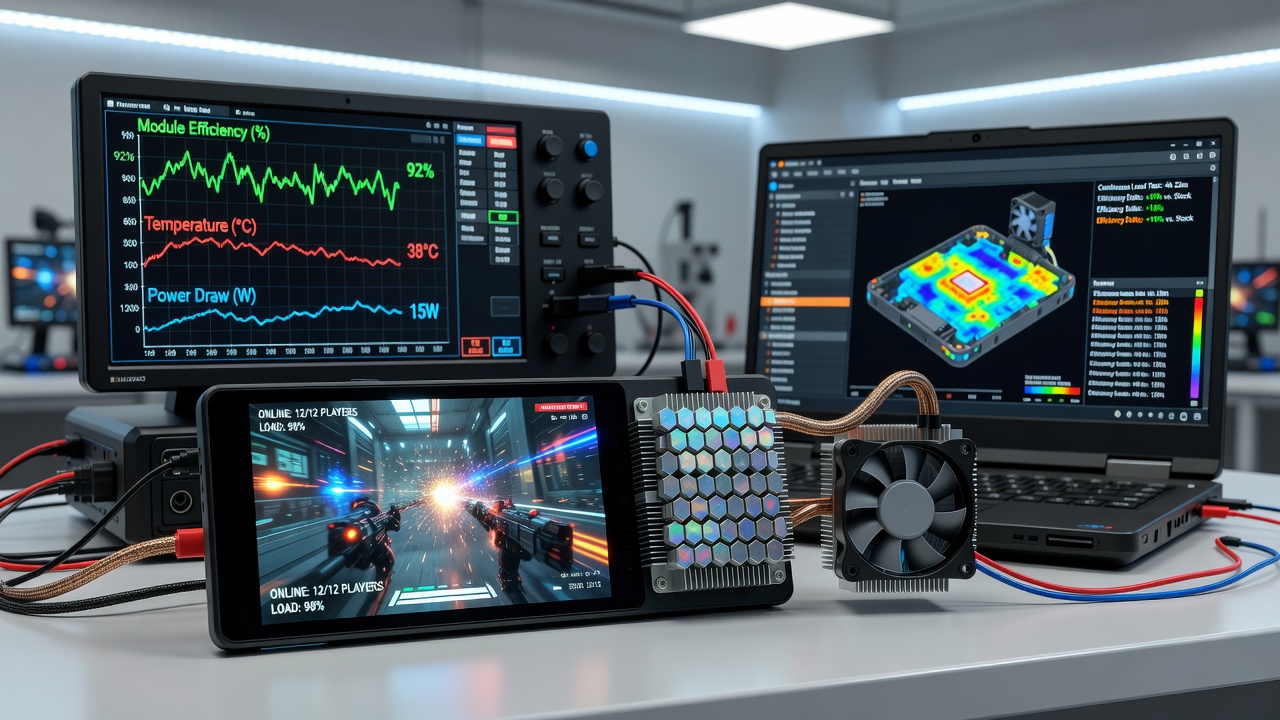
Continuous online multiplayer sessions generate steady CPU and GPU utilization that often exceeds 80 percent for periods longer than two hours. In such conditions, bismuth telluride modules must reject heat from the system-on-chip while contending with rising ambient temperatures inside the chassis. Test rigs equipped with power meters have recorded cooling coefficients of performance between 0.4 and 0.7 when modules operate at currents of 3 to 5 amperes, depending on heat sink fin density and airflow velocity. One laboratory study conducted at a Canadian university tracked console skin temperatures during simulated 4K streaming matches and found that active thermoelectric assistance reduced peak surface temperatures by 6 to 9 degrees Celsius relative to passive graphite sheet solutions alone. The same dataset indicated that module power consumption averaged 4.2 watts under those loads, representing roughly 8 percent of total system draw.