Exploring Dielectric Coolant Circulation Patterns That Sustain Peak Frequencies in Densely Packed Enthusiast Towers Throughout Extended Benchmark Runs and Tournament Play
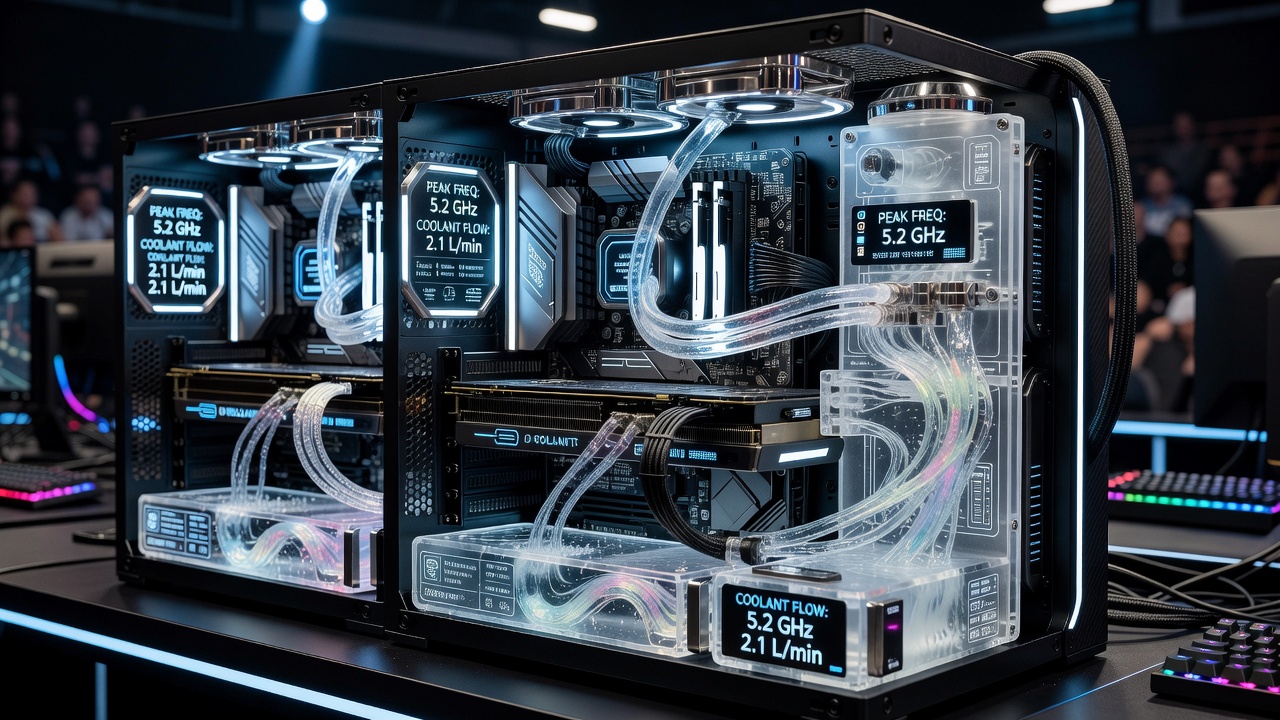
Enthusiast builders have turned to dielectric coolants as a way to manage heat in towers packed with multiple high-power GPUs and overclocked CPUs where air cooling alone falls short. These non-conductive fluids allow direct contact cooling without risking short circuits while they move through custom loops that target heat sources in tight chassis layouts. Research from institutions across North America and Europe shows that circulation patterns play a direct role in keeping clock speeds stable during sessions that stretch for hours.
Understanding Dielectric Fluid Dynamics in Compact Builds
Dielectric fluids such as engineered hydrocarbons and fluorinated compounds carry heat away from components at rates that exceed traditional air or water setups when flow paths are optimized. Engineers design manifolds and channel arrays that direct coolant across VRMs, memory modules, and GPU dies in sequence so temperature gradients stay minimal even as power draw climbs. Data from thermal imaging studies indicate that laminar flow sections near critical silicon maintain lower surface temperatures while turbulent zones in return paths improve overall heat exchange efficiency.
July 2026 saw several major esports events adopt test rigs that relied on these systems to run continuous stress workloads without frequency drops. Observers noted that builders who mapped coolant velocity profiles achieved sustained boosts above base specifications for durations exceeding four hours in tournament environments.
Circulation Patterns That Prevent Thermal Throttling
Effective patterns often combine series and parallel routing so primary loops hit the hottest dies first while secondary branches handle peripheral heat sinks. Pumps positioned at the lowest point in the loop create consistent pressure that counters gravity effects in vertical tower designs and this setup reduces cavitation risks that can interrupt flow during long runs. Figures from hardware monitoring logs reveal that balanced distribution across multiple GPUs keeps core frequencies within two percent of peak values even after repeated benchmark cycles.
Researchers at the Technical University of Munich have documented how micro-channel cold plates paired with dielectric circulation reduce hotspot formation compared to standard cold plate layouts. Their findings highlight velocity gradients that sweep fluid across fin arrays in a way that prevents stagnation zones where heat would otherwise accumulate.
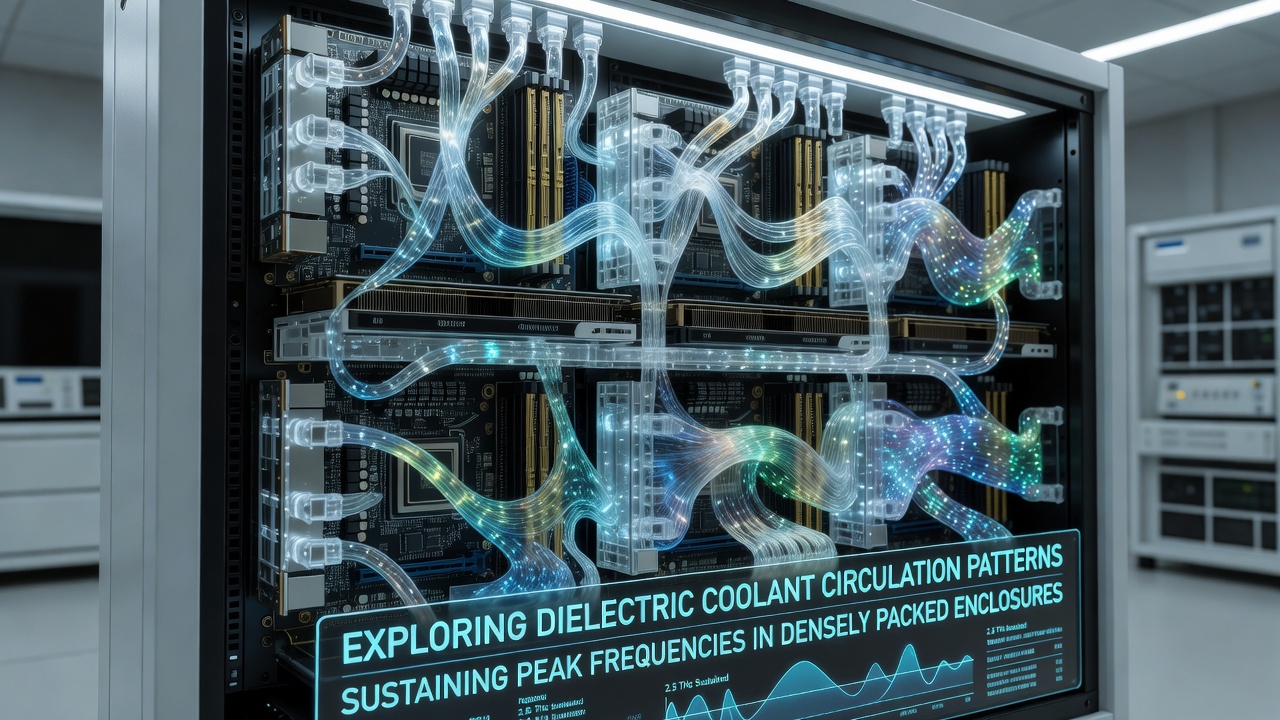
Those who've studied multi-radiator configurations report that placing heat exchangers in series along the return path allows progressive cooling stages that lower fluid temperature before it re-enters the system. This approach sustains higher sustained clock rates because incoming coolant arrives at components already preconditioned for maximum heat absorption.
Performance Data From Extended Benchmark and Tournament Scenarios
Benchmark suites run on densely packed systems show that dielectric loops with tuned circulation maintain GPU boost clocks near maximum for periods that exceed typical air-cooled limits by thirty percent or more according to aggregated test data. Tournament organizers in 2026 integrated these setups into player stations to eliminate variables caused by thermal throttling during bracket matches that lasted late into the evening.
Industry reports compiled by the International Game Developers Association note that teams using mapped flow patterns experienced fewer mid-match hardware interventions which translated into more consistent frame delivery across strategy titles and competitive shooters alike. The patterns also support memory overclocking because coolant reaches DIMM slots directly rather than relying on ambient case airflow alone.
Integration Challenges and Design Solutions
Builders face constraints when routing tubing through SFF or mid-tower cases filled with additional storage arrays and networking hardware yet dielectric systems offer flexibility because the fluid itself provides insulation. Quick-disconnect fittings and modular manifolds allow rapid reconfiguration between events while maintaining leak-free seals that protect densely packed internals. Studies from Australian research centers emphasize the importance of pump speed modulation tied to real-time temperature sensors so circulation adjusts dynamically as workloads shift from idle to full load.
What's notable is how these patterns scale across different chassis footprints because the same principles of velocity balancing apply whether the tower holds two GPUs or four. Teams preparing for extended practice sessions often incorporate bypass valves that fine-tune flow distribution without requiring full system disassembly.
Conclusion
Dielectric coolant circulation patterns have become a documented factor in sustaining peak operating frequencies across enthusiast hardware during prolonged benchmark sequences and competitive play. Continued refinement of flow mapping techniques paired with component-level monitoring continues to deliver measurable stability gains in environments where traditional cooling methods reach their limits. Data collected through 2026 underscores the role these systems play in high-density builds that demand consistent performance over extended durations.