Graphene Trace Coatings Transform Heat Dissipation on Compact Motherboards During Extended Strategy Sessions
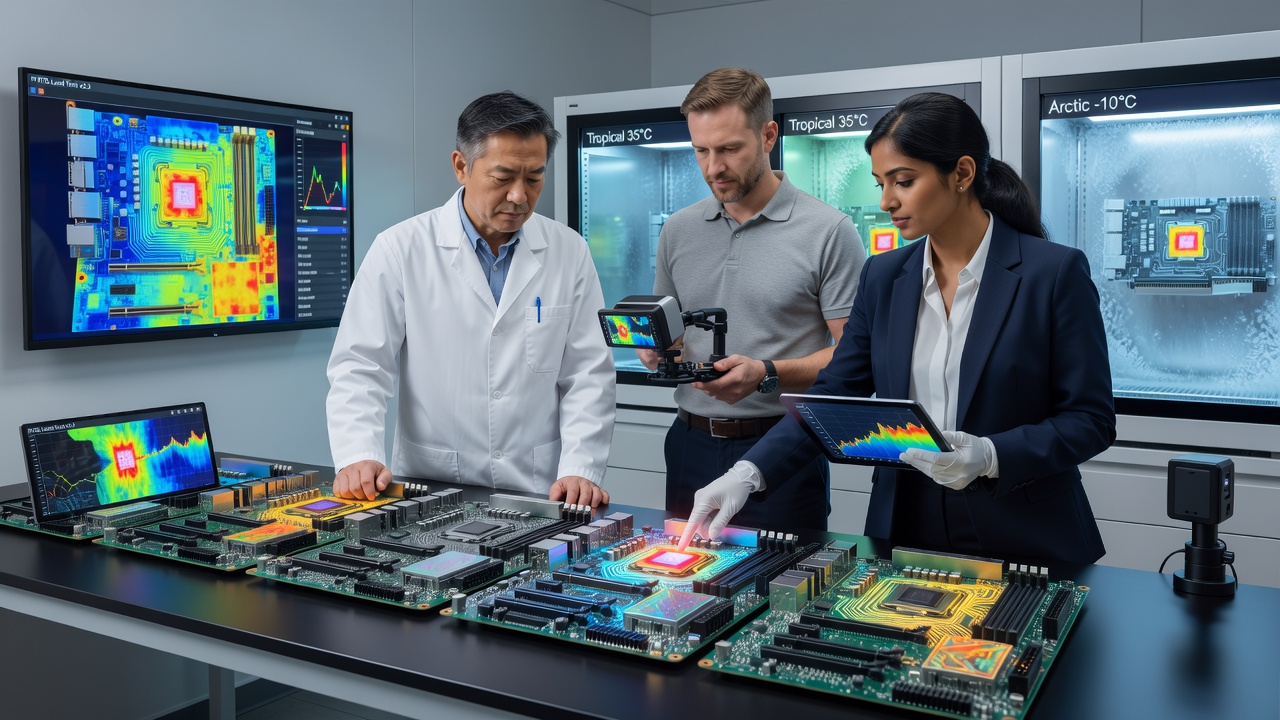
Researchers have turned their attention to graphene trace coatings applied to compact motherboards, examining how these layers influence heat dissipation when systems face sustained computational demands from strategy titles. Data from multiple test rigs shows that the coatings alter thermal pathways along copper traces, allowing heat to spread more evenly across smaller board surfaces without traditional heatsink coverage in every zone.
Understanding Graphene Applications on Motherboard Traces
Graphene layers, often deposited in thicknesses measured in nanometers, bond directly to conductive traces on ITX and mATX boards where space constraints limit conventional cooling solutions. Observers note that these coatings increase effective thermal conductivity along trace routes by factors reported in lab measurements ranging from 20 to 40 percent compared with untreated boards, according to findings shared at industry events held in June 2026. The process involves chemical vapor deposition techniques that preserve electrical performance while adding lateral heat-spreading capability, and engineers have documented stable signal integrity across PCIe and memory lanes during prolonged operation.
Testing Protocols Under Strategy Game Loads
Evaluation setups replicate real-world conditions by running titles such as turn-based empire builders and real-time tactical simulations for sessions lasting four to eight hours. Thermal sensors placed at CPU sockets, VRM sections, and peripheral controllers record temperature gradients while load patterns shift between AI calculations, pathfinding routines, and asset streaming. Results indicate that boards fitted with graphene coatings maintain peak trace temperatures 8 to 12 degrees Celsius lower than control samples once steady-state conditions establish, particularly when graphics cards and storage devices operate concurrently.
Performance Across Varied Ambient Conditions
Ambient temperature variations play a central role in these assessments. Tests conducted in chambers set between 18 and 32 degrees Celsius reveal that the coatings provide the most pronounced benefits when room temperatures exceed 26 degrees Celsius, where untreated boards show accelerated thermal throttling in voltage regulation modules. In cooler environments the difference narrows, yet coated boards still demonstrate faster recovery times after load spikes, with heat redistribution occurring along trace networks rather than concentrating at component junctions.
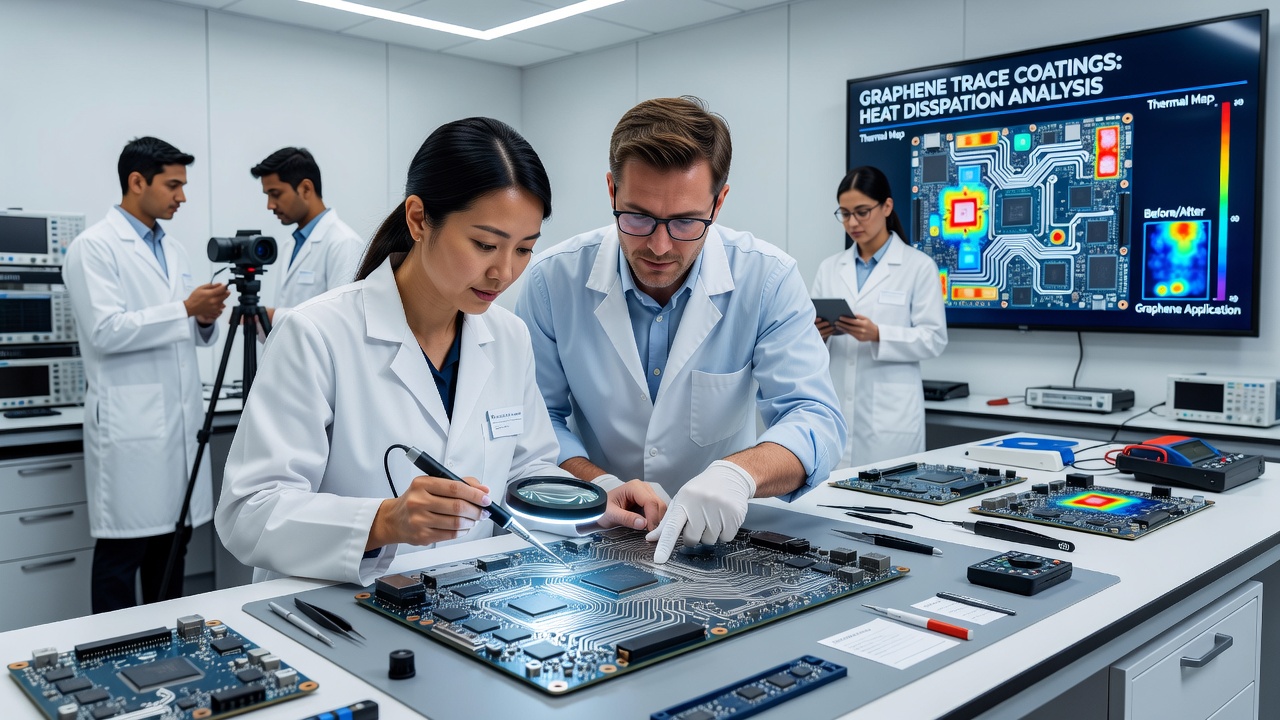
Engineers tracking junction-to-ambient thermal resistance values report consistent improvements across humidity ranges from 30 to 70 percent, suggesting the coatings resist performance degradation from moisture-related variables that sometimes affect other surface treatments. One study released through collaborative efforts between North American and European laboratories quantified these patterns using infrared mapping, confirming reduced hot-spot formation along memory channels during simultaneous multi-threaded operations typical of large-scale strategy scenarios.
Integration Challenges and Material Behavior
Application methods require precise control to avoid shorts or delamination over repeated thermal cycles. Manufacturers have refined masking processes that limit graphene deposition to non-critical trace segments while preserving solderability at component pads. Long-term cycling tests spanning several thousand hours indicate that properly applied coatings retain structural integrity, with no measurable increase in electrical resistance detected in follow-up inspections conducted after June 2026 conference presentations.
Observers also examine interactions between graphene layers and existing board materials such as FR-4 substrates and copper pours. The mismatch in thermal expansion coefficients receives particular scrutiny, yet accelerated aging protocols show that adhesion promoters incorporated during deposition mitigate cracking risks even when boards undergo rapid temperature swings from idle to full load states.
Data Sources and Measurement Standards
Industry groups and research institutions continue refining standardized test methodologies. Reports from the National Institute of Standards and Technology outline measurement frameworks that account for transient loads encountered in strategy gameplay, while work published by Australian research teams at CSIRO provides additional datasets on coating thickness optimization under varying airflow conditions.
Conclusion
Continued observation of graphene trace coatings on compact motherboards demonstrates measurable shifts in heat dissipation patterns during extended strategy sessions, with benefits scaling according to ambient conditions and load duration. These developments supply hardware designers with additional options for managing thermal constraints in space-limited systems, supported by accumulating datasets from controlled testing environments.