How Force Feedback Mechanisms in Racing Wheels Have Adapted to Support Next-Generation Simulation Software Demands
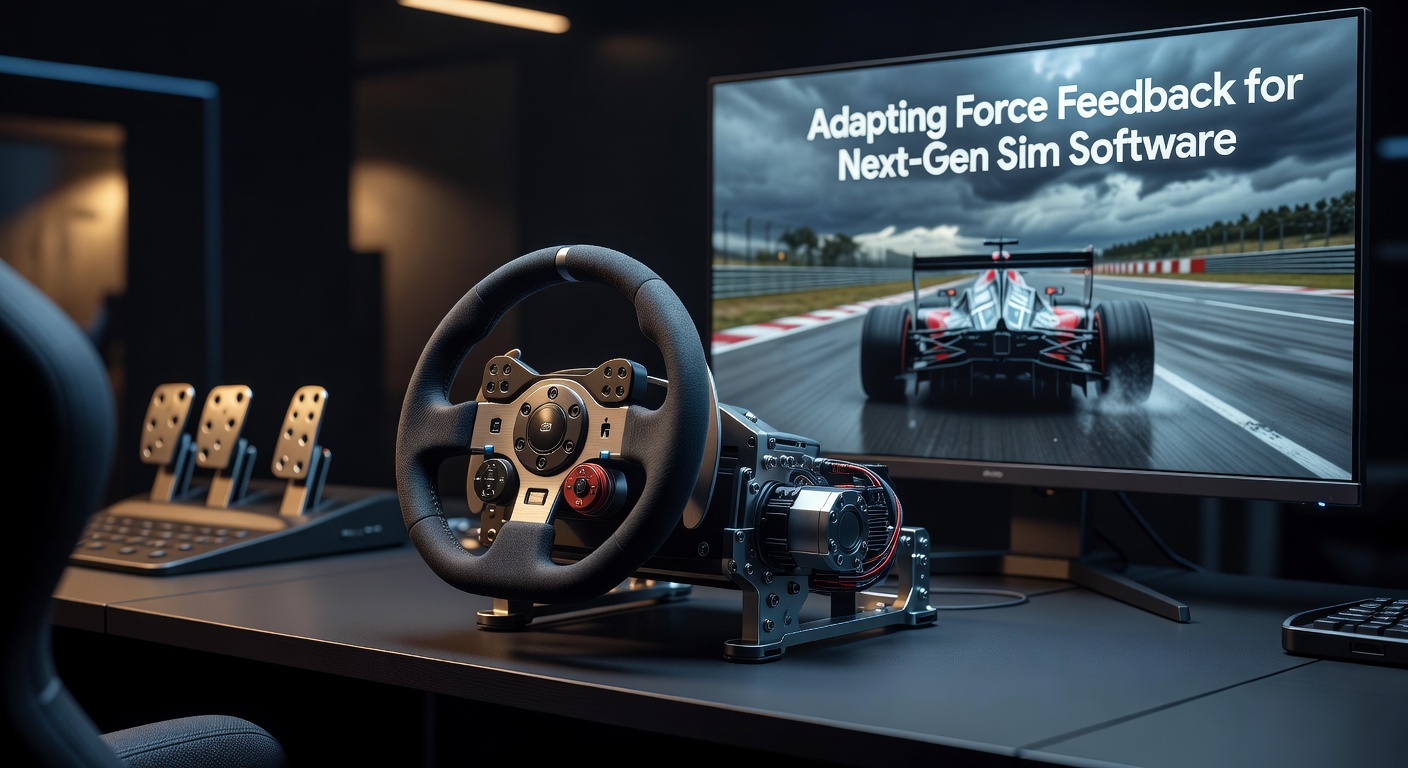 As simulation software continues to evolve with higher fidelity physics engines and real-time telemetry integration, force feedback systems in racing wheels have undergone targeted upgrades to match those demands. Manufacturers have focused on refining motor torque delivery, sensor resolution, and firmware protocols that allow wheels to render nuanced road surface details, tire grip loss, and aerodynamic forces without introducing latency or mechanical strain.
Core Hardware Upgrades in Recent Models
Direct drive motors now feature higher power densities and improved cooling pathways, enabling sustained output levels that align with the computational intensity of next-generation titles released through early 2026. These motors work alongside dual-stage encoders that sample wheel position at rates exceeding previous standards, which helps maintain accuracy when software simulates variable suspension responses or track irregularities across extended sessions.
Engineers have also introduced modular belt and gear hybrid transmissions in several mid-tier units, balancing cost with the ability to deliver quick directional changes that newer physics models require during corner entry and exit phases. Data from endurance testing indicates these hybrid setups reduce heat buildup while preserving the fine torque gradients essential for conveying subtle understeer or oversteer cues.
Software Integration and Protocol Advances
Next-generation simulation platforms rely on expanded telemetry streams that transmit hundreds of parameters per second, forcing wheel firmware to incorporate more sophisticated filtering algorithms. Developers have implemented adaptive gain scaling that automatically adjusts feedback intensity based on vehicle setup changes or session conditions, preventing the clipping that occurred with older fixed-gain systems.
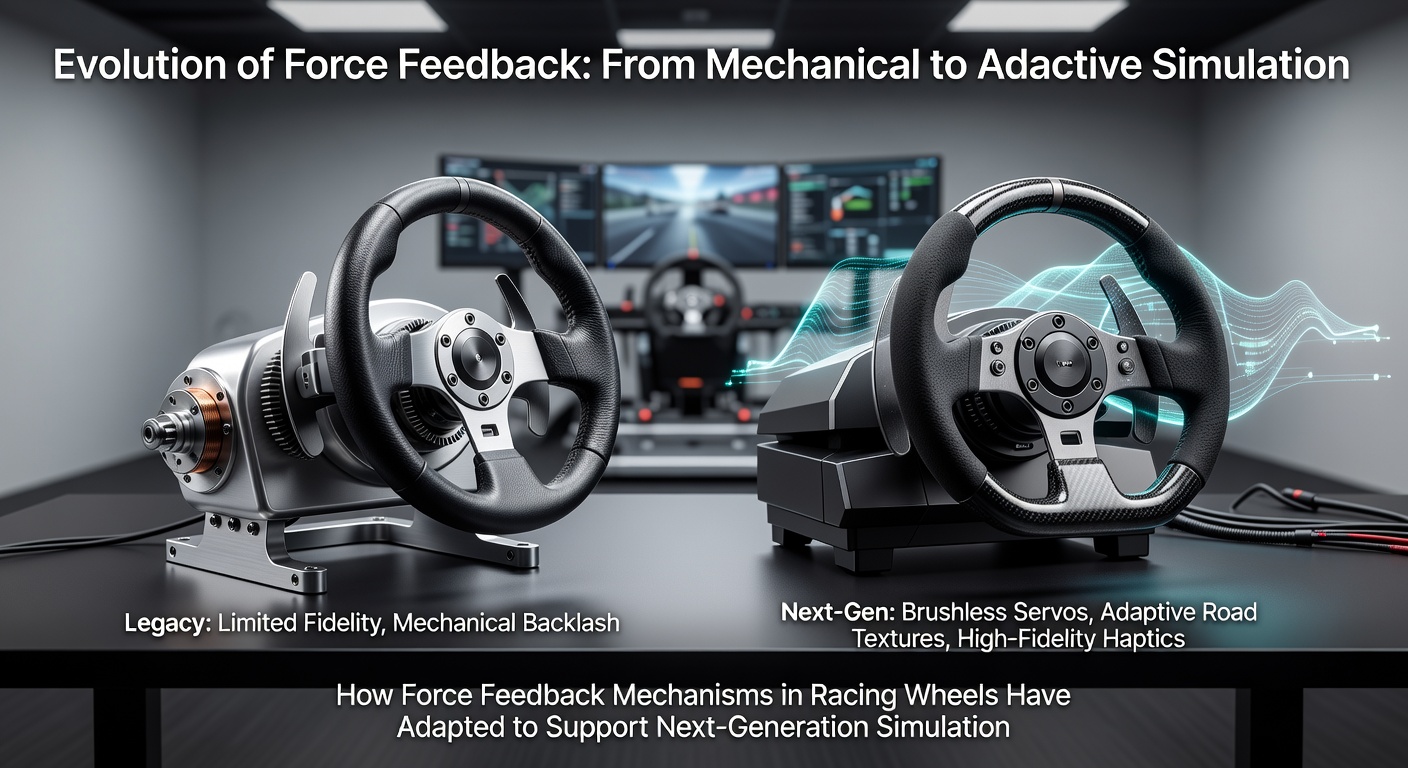
USB and wireless communication standards have expanded bandwidth allocations specifically for force feedback data packets, which allows wheels to receive updates in tighter synchronization with on-screen visuals. Observers note that this tighter coupling becomes particularly valuable in multiplayer environments where tire wear calculations and dynamic track evolution create constantly shifting feedback profiles.
Regional Research Contributions and Industry Benchmarks
Studies conducted at institutions across the European Union have quantified how increased encoder resolution correlates with reduced driver correction inputs during precision maneuvers, providing measurable validation for hardware redesigns. Meanwhile, reports from the Canadian Virtual Motorsport Research Group highlight similar gains in stability when wheels interface with software that models tire temperature gradients and surface deformation.
These adaptations extend to support for emerging standards in haptic layering, where wheels combine traditional torque feedback with secondary vibration channels to represent engine vibrations or curb impacts separately. Industry groups have begun publishing interoperability guidelines that encourage consistent command sets across different wheel ecosystems, which simplifies integration for software studios working on cross-platform releases.
Performance Outcomes in Current Use Cases
By May 2026, competitive teams and amateur leagues alike report smoother transitions between low-speed maneuvering and high-speed stability thanks to these refined mechanisms. Wheels equipped with the latest firmware maintain consistent force output even when simulation software pushes multiple simultaneous effects, such as wind resistance combined with brake lockup simulation.
Calibration routines have grown more automated, using software-driven self-diagnostics that map motor response curves against expected telemetry outputs before each session. This reduces setup time while ensuring that feedback remains proportional to the virtual forces calculated by the underlying engine.
Conclusion
Force feedback mechanisms have adapted through iterative hardware refinements, expanded communication protocols, and tighter software coupling that together address the increased complexity of modern simulation demands. Continued collaboration between component manufacturers and software developers suggests further incremental improvements will follow as telemetry datasets grow denser and physics models incorporate additional real-world variables.