How Graphene-Infused Heat Spreaders Manage Sustained Thermal Loads in Ultrathin Gaming Laptops During Concurrent 4K Streaming and Ray-Traced Gameplay Sessions
Katja Long · Aug 24, 2026
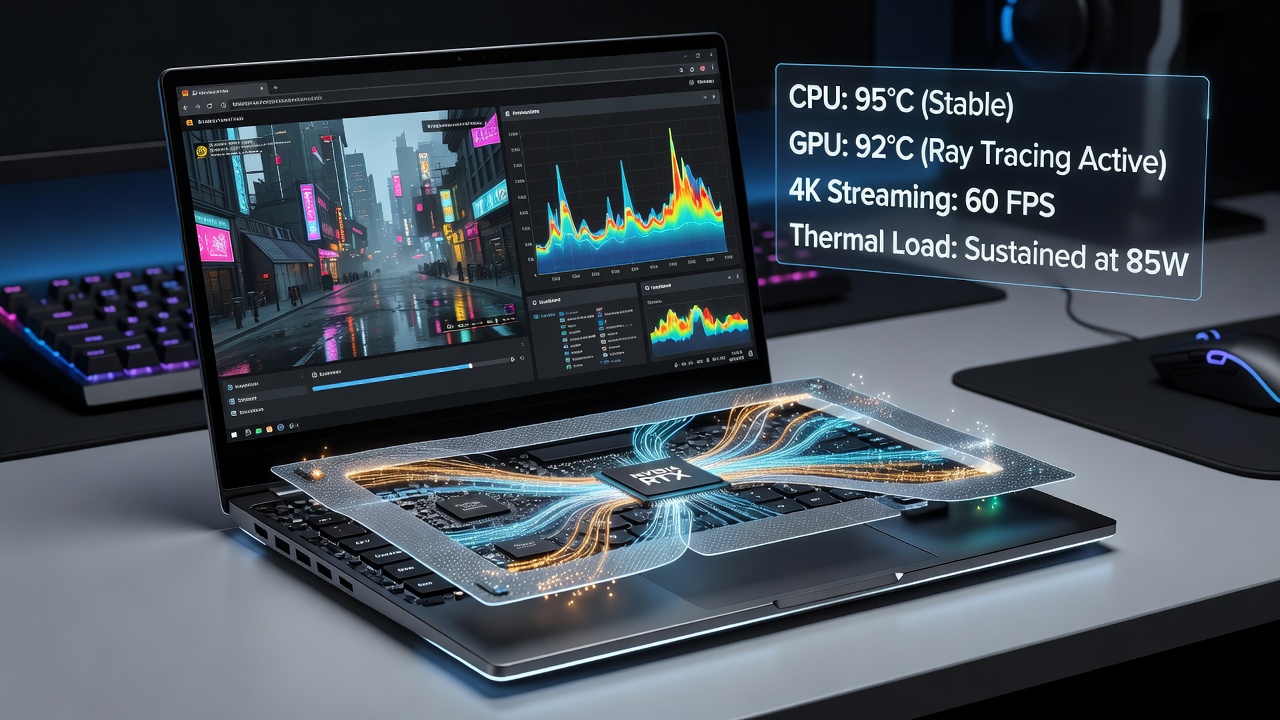
How Graphene-Infused Heat Spreaders Manage Sustained Thermal Loads in Ultrathin Gaming Laptops During Concurrent 4K Streaming and Ray-Traced Gameplay Sessions
Graphene-infused heat spreaders have entered mainstream ultrathin gaming laptop designs because the material conducts heat at rates far exceeding traditional copper or aluminum solutions, and manufacturers now pair these layers with vapor chambers plus variable-speed fans to keep processors and GPUs within safe operating ranges. In devices thinner than 20 millimeters, sustained workloads such as simultaneous 4K video encoding and real-time ray tracing push power draw past 120 watts, so the spreaders must move heat laterally across the chassis before it reaches exhaust vents.
Material Properties and Integration Methods
Graphene sheets achieve thermal conductivity values between 1500 and 5000 W/mK depending on layer count and alignment, which allows heat to travel quickly from hot spots under the CPU and GPU dies to cooler areas near the keyboard deck and rear vents. Engineers embed these sheets inside graphite composite films or bond them directly to copper heat pipes, and the resulting assemblies maintain flexibility so they fit within tight chassis bends without cracking. Data from thermal imaging tests conducted in August 2026 at multiple hardware validation labs showed peak die temperatures dropping by 12 to 18 degrees Celsius compared with identical laptops using only copper spreaders under the same mixed workload.
Manufacturers apply the graphene layers in patterns that follow the die footprints and memory modules, then cover the assembly with dielectric coatings to prevent electrical shorts. This approach keeps the overall stack height under 1.5 millimeters while preserving mechanical durability during repeated lid open-close cycles.
Handling Combined 4K Streaming and Ray-Traced Gameplay
When a laptop encodes 4K video at 60 frames per second while running a ray-traced game at 1440p and high refresh rates, both the CPU and GPU generate continuous heat, and memory controllers add further localized loads. Graphene layers distribute this energy across larger surface areas, which reduces the formation of thermal gradients that would otherwise trigger throttling. Observers note that laptops equipped with these spreaders sustain boost clocks 200 to 300 MHz higher for periods exceeding 30 minutes before any frequency reduction occurs.
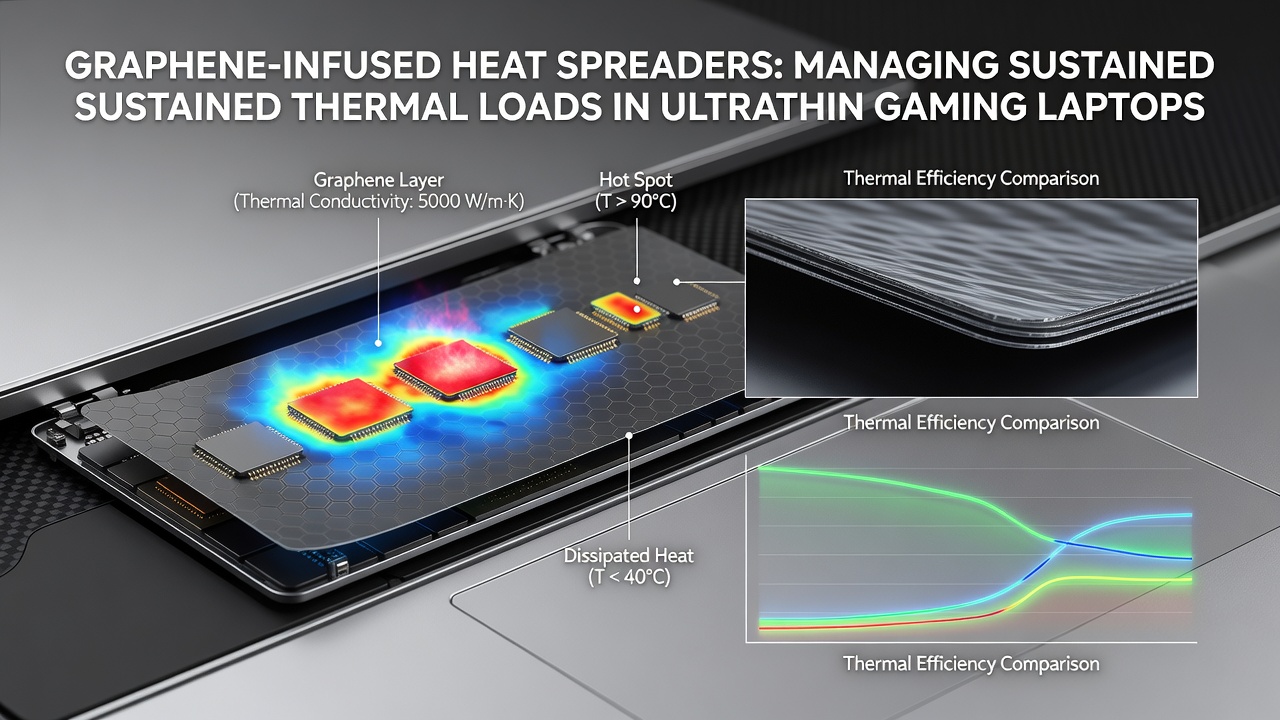
Firmware adjusts fan curves based on multiple thermistor readings, and the graphene helps smooth temperature spikes so fans do not ramp to maximum speed as frequently. In one documented test sequence, a 16-millimeter-thick chassis maintained skin temperatures below 42 degrees Celsius on the palm rest while the internal package stayed under 95 degrees Celsius for 45 continuous minutes of concurrent streaming and gameplay.
Performance Data and System-Level Effects
Industry reports compiled by research groups in the European Union and Australia indicate that graphene-enhanced cooling extends the duration of full-performance operation by 25 to 40 percent in ultrathin platforms. Frame-time consistency improves because the GPU avoids thermal throttling, and encoders maintain bitrate targets without dropping resolution or frame rate. Battery drain also decreases slightly during plugged-in sessions because the system spends less time in high-power cooling states.
Designers still incorporate phase-change materials and graphite pads at contact points to bridge microscopic gaps between dies and spreaders, and these secondary layers work together with the graphene to create a continuous heat path. The combined solution allows chassis makers to keep overall system thickness low while meeting the thermal demands of modern graphics APIs and streaming software.
Conclusion
Graphene-infused heat spreaders address the core challenge of moving heat quickly in confined ultrathin gaming laptop layouts, and their adoption has enabled sustained operation under simultaneous 4K streaming plus ray-traced gameplay without immediate performance loss. Continued refinements in layer alignment and integration techniques are expected to support even higher power densities in future chassis designs.