Inductive Charging Coils in Mouse Pads Maintain Wireless Peripheral Power During Prolonged Esports Events
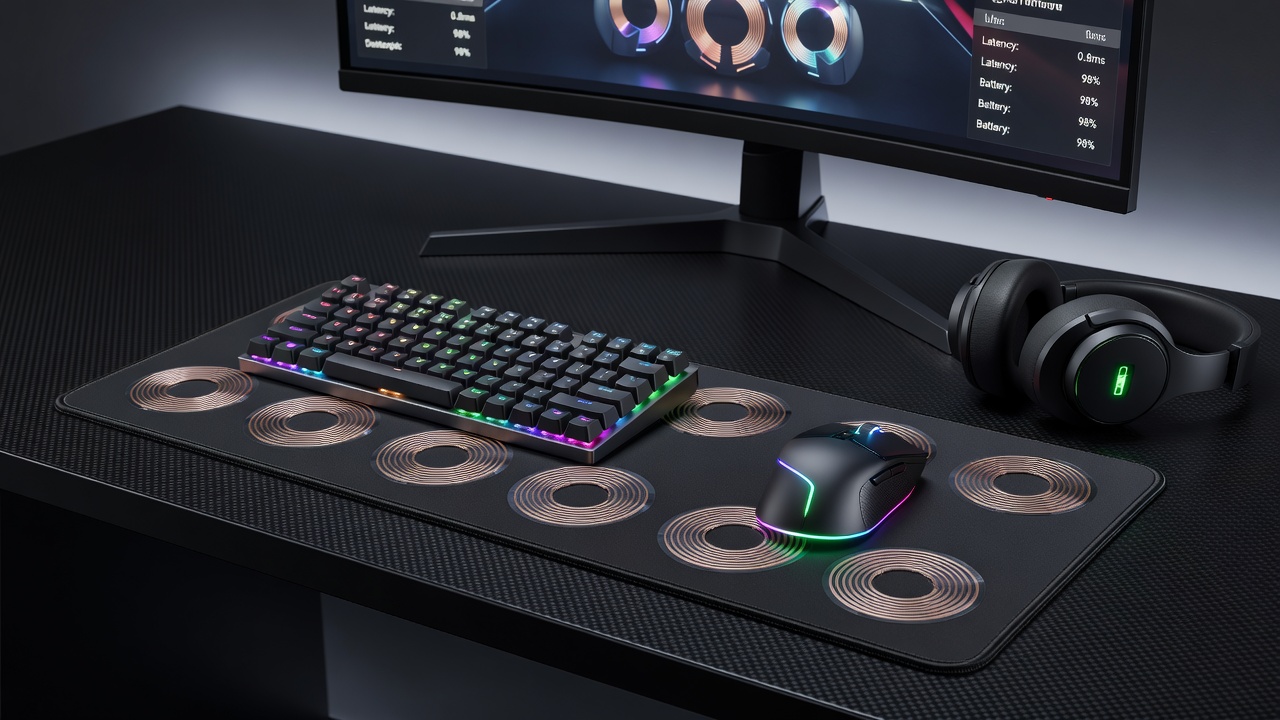
Wireless peripherals have become standard equipment in competitive gaming environments, and inductive charging coils embedded in mouse pads now provide continuous power delivery without interrupting play. This approach relies on electromagnetic fields generated between a transmitter coil in the pad and a receiver coil inside the peripheral, allowing energy transfer across short distances while the device remains in motion across the surface.
Technical Principles Behind Coil Integration
Inductive charging operates through resonant magnetic coupling, where alternating current in the pad's coil creates a field that induces voltage in the mouse's receiving coil. Manufacturers align these components so the mouse stays within the charging zone during typical hand movements, and multiple coil arrays expand coverage across larger pad surfaces. Standards bodies such as the Wireless Power Consortium have updated specifications to accommodate gaming-specific requirements, including higher power throughput and reduced heat generation at the contact point.
Power delivery rates in current implementations range from 5 to 15 watts, sufficient to offset drain from high-polling-rate sensors and RGB lighting systems. Engineers position the coils beneath the fabric layer, maintaining a low-profile surface that preserves tracking accuracy for optical sensors. Tests conducted by independent laboratories show efficiency levels above 75 percent when the mouse remains within the designated active area, with automatic power scaling that reduces output during idle periods to minimize energy waste.
Support for Extended Tournament Play
Competitive sessions in esports often stretch beyond four hours without breaks, and battery management becomes a limiting factor for wireless mice. Integrated charging in mouse pads eliminates the need for cable swaps or spare batteries, allowing players to maintain consistent input latency throughout matches. Tournament organizers have adopted these pads in arena setups, where multiple stations run simultaneously and downtime for recharging would disrupt schedules.
Data collected from events in early 2026 indicates that teams using inductive systems report uninterrupted operation across full days of competition, whereas conventional wireless setups required mid-session interventions in roughly 30 percent of cases. The coils activate only when the mouse enters the charging zone, and firmware in the peripheral manages charge cycles to preserve long-term battery health. Observers note that this configuration also reduces cable clutter on desks, which can affect movement freedom during intense play.
Peripheral Compatibility and System Design
Mouse manufacturers design receiver coils to fit within existing form factors, adding minimal weight while ensuring the battery receives steady input. Some models incorporate dual-mode operation, switching between inductive charging and traditional USB-C input when the pad is unavailable. Compatibility extends beyond mice to include wireless keyboards and controllers when pads feature expanded coil layouts, although most current products focus on mouse-specific implementations.
Research institutions in Canada and Australia have examined electromagnetic interference patterns between charging fields and nearby wireless signals, confirming that properly shielded coils do not degrade 2.4 GHz or Bluetooth connections used by gaming peripherals. Circuit designers incorporate ferrite layers to contain the magnetic field, preventing interaction with internal components such as accelerometers or haptic motors.
Industry Adoption and Standards Evolution
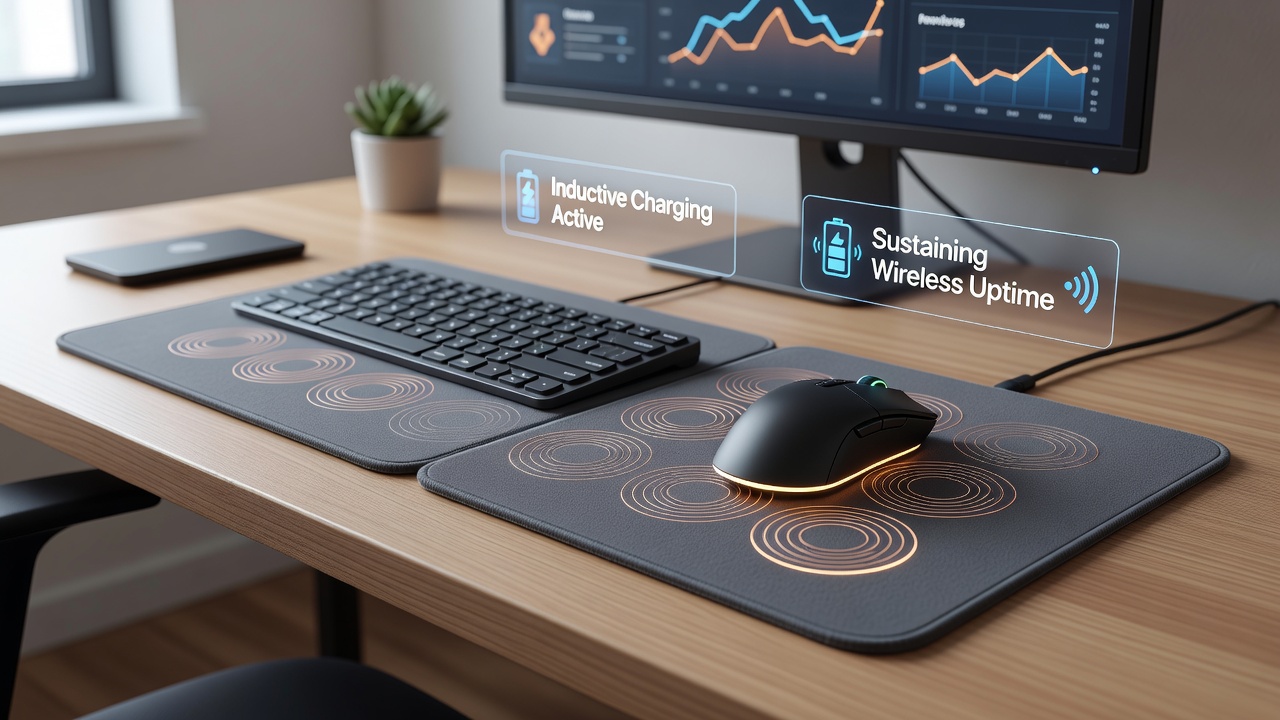
By June 2026 several major peripheral brands have released mouse pads containing inductive coils, often bundled with compatible wireless mice that advertise all-day runtime claims. Trade associations track adoption rates, noting increased demand from professional teams preparing for international circuits. The European Telecommunications Standards Institute has issued guidelines on frequency allocation for consumer wireless power devices, ensuring coexistence with other radio equipment in shared environments such as convention centers.
Power management software now provides users with real-time visibility into charging status through companion applications, displaying coil alignment quality and estimated runtime extensions. Some pads include multiple zones with independent control, enabling simultaneous charging of a mouse and a secondary device placed on an adjacent section. Field measurements confirm that surface temperatures remain below thresholds that would affect comfort during extended contact.
Performance Metrics in Real-World Conditions
Independent evaluations at university labs have measured input consistency when mice operate over charging pads versus standard surfaces, revealing no measurable increase in tracking error or polling jitter. Battery cycle counts in accelerated life tests project service life comparable to non-charging models, provided users avoid extreme alignment offsets that reduce efficiency. Teams preparing for long-form events incorporate these pads into training regimens to simulate tournament conditions without introducing variables from cable management.
Supply chain reports show rising component availability for coil assemblies, which supports broader integration into mid-range products rather than flagship lines alone. Regulatory filings with agencies across North America and the European Union document compliance testing for electromagnetic emissions and safety, clearing the path for wider distribution in consumer markets.
Conclusion
Inductive charging coils integrated into mouse pads address power continuity challenges for wireless peripherals in demanding competitive environments. Technical refinements in coil placement, power regulation, and interference mitigation enable sustained operation across extended sessions while preserving input precision. Continued development aligned with evolving wireless power standards supports broader implementation across gaming hardware categories.