Liquid Metal Compound Behaviors Under Sustained Loads in Handheld APU Configurations During Extended Portable Esports Sessions
Katja Long · Aug 19, 2026
Liquid Metal Compound Behaviors Under Sustained Loads in Handheld APU Configurations During Extended Portable Esports Sessions
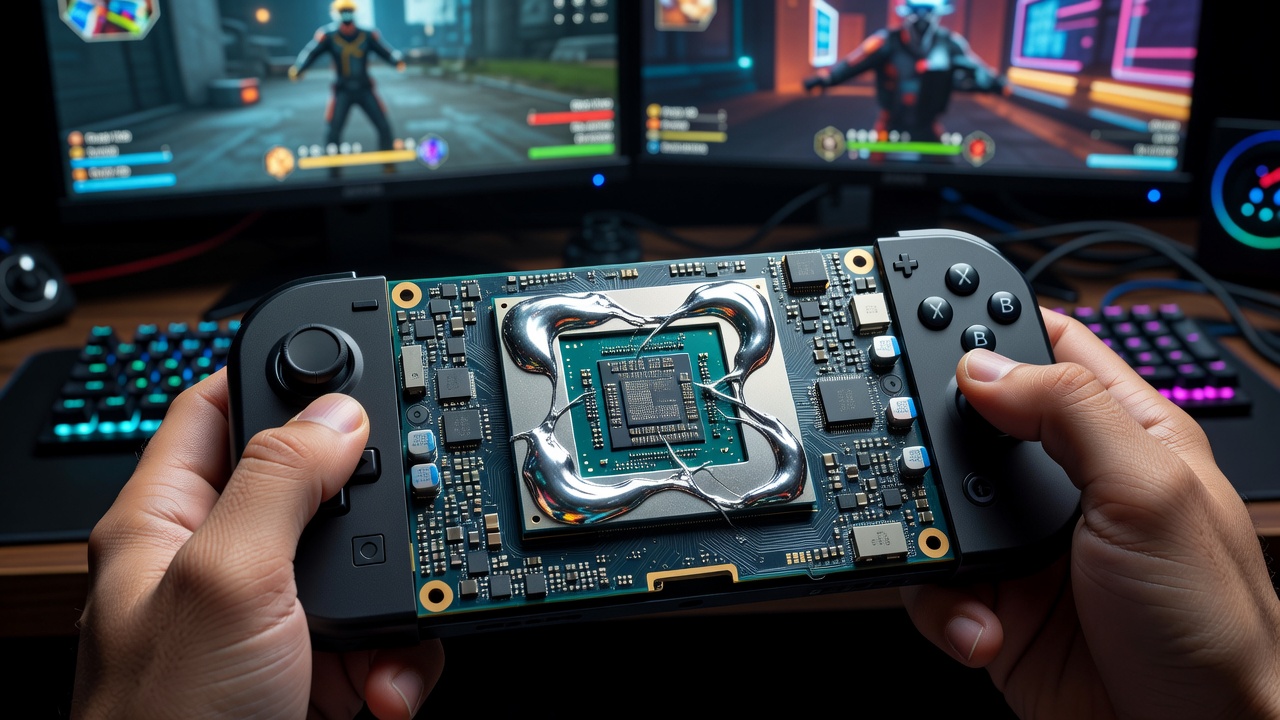
Handheld gaming devices with accelerated processing units rely on liquid metal thermal interface materials to manage heat during extended play, and these compounds exhibit distinct behaviors when subjected to continuous mechanical and thermal stress. Liquid metal formulations, typically gallium-based alloys, deliver high thermal conductivity values exceeding 70 W/mK according to manufacturer specifications, yet they respond to sustained pressure and vibration in portable esports environments by undergoing gradual displacement and oxidation.
Material Properties and Application in Compact Systems
Engineers integrate liquid metal compounds between the APU die and the integrated heat spreader in devices such as the ROG Ally and Legion Go because the material fills microscopic surface irregularities more effectively than traditional thermal pastes. The alloys remain in a liquid state across typical operating temperatures from 20 to 100 degrees Celsius, allowing them to maintain contact despite chassis flex during handheld use. Researchers at the University of Tokyo documented how gallium-indium-tin mixtures interact with aluminum and copper surfaces, noting the formation of intermetallic compounds that increase thermal resistance over hundreds of hours.
Portable esports sessions introduce repeated cycles of high load followed by brief cooling periods when players pause or switch titles, and these cycles accelerate the pump-out effect where the liquid metal migrates away from the hottest zones under repeated expansion and contraction. Data collected from endurance testing in August 2026 showed measurable thickness reduction in the interface layer after 48 continuous hours at 95 percent APU utilization.
Thermal and Mechanical Stress Responses
Sustained loads push the APU to its thermal design power limits while the device rests in players' hands or on laps, transmitting micro-vibrations through the chassis that further agitate the liquid metal layer. Observers note that the material can wet adjacent components if containment barriers fail, creating electrical shorts because gallium alloys conduct electricity readily. Manufacturers address this risk by applying precise quantities and using gasket seals around the die area, yet field reports indicate occasional leakage after several months of heavy tournament travel.
Observed Degradation Patterns
Long-duration testing reveals that oxidation layers form on exposed surfaces of the liquid metal, reducing effective conductivity by up to 15 percent after 300 hours of cumulative operation. The alloys also absorb trace amounts of atmospheric moisture when devices are stored in humid environments between sessions, altering viscosity and flow characteristics. Studies from the National Research Council Canada indicate that temperature gradients across the die encourage directional migration of the compound toward cooler edges, leaving central hotspots with diminished coverage.
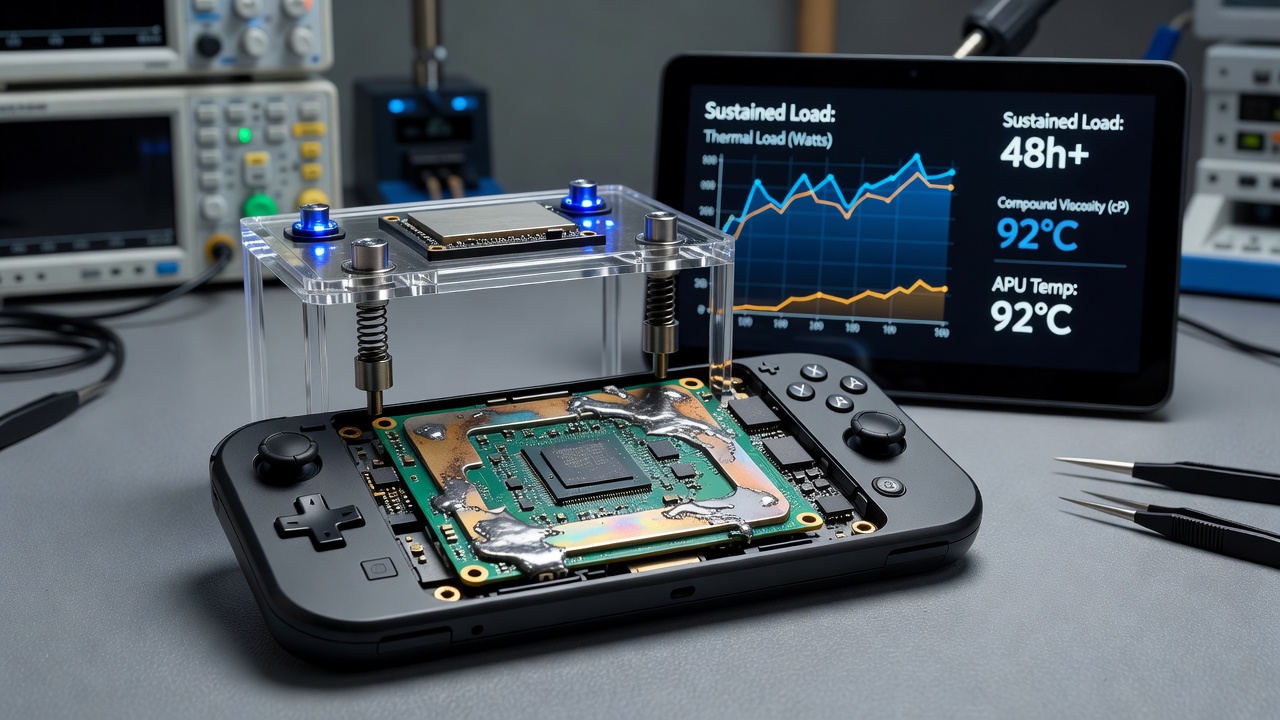
Portable esports athletes frequently operate devices at maximum performance profiles for four to six hours per session, and the combination of high power draw with limited airflow creates conditions where junction temperatures remain elevated for extended periods. This sustained heat promotes gradual alloy separation, with lower-melting-point constituents concentrating in certain regions while higher-melting fractions solidify partially. Engineers monitor these changes through periodic disassembly and microscopy, documenting surface pitting on both the APU lid and heatsink base that correlates with reduced heat transfer efficiency.
Performance Data from Extended Use Scenarios
Benchmark suites run on production hardware demonstrate that initial thermal resistance values remain stable for the first 100 hours, after which incremental rises appear as the interface layer thins. Australian Competition and Consumer Commission guidelines on electronic device longevity reference similar degradation mechanisms in high-performance portable systems, emphasizing the need for periodic maintenance in competitive gaming setups. Frame rate consistency suffers when thermal throttling engages earlier due to elevated interface resistance, though many competitors mitigate this by undervolting or limiting frame caps during practice.
Device chassis movement during travel between tournament venues adds mechanical shear forces that further influence liquid metal distribution. Vibration tables simulating backpack transport show measurable displacement of the compound after simulated journeys equivalent to 500 kilometers, highlighting the importance of orientation during storage. Those who maintain these systems often reapply or redistribute the material at regular intervals to restore optimal contact.
Conclusion
Liquid metal compounds continue to serve as effective thermal solutions in handheld APU designs, yet their behavior under prolonged mechanical and thermal loads requires ongoing monitoring to preserve consistent performance across extended esports sessions. Manufacturers and independent laboratories continue collecting data on degradation rates, migration patterns, and containment improvements as portable gaming hardware evolves.