Memory Timing Optimizations Enhancing Frame Consistency in Multi-Monitor Esports Setups for Strategy Game Competitors
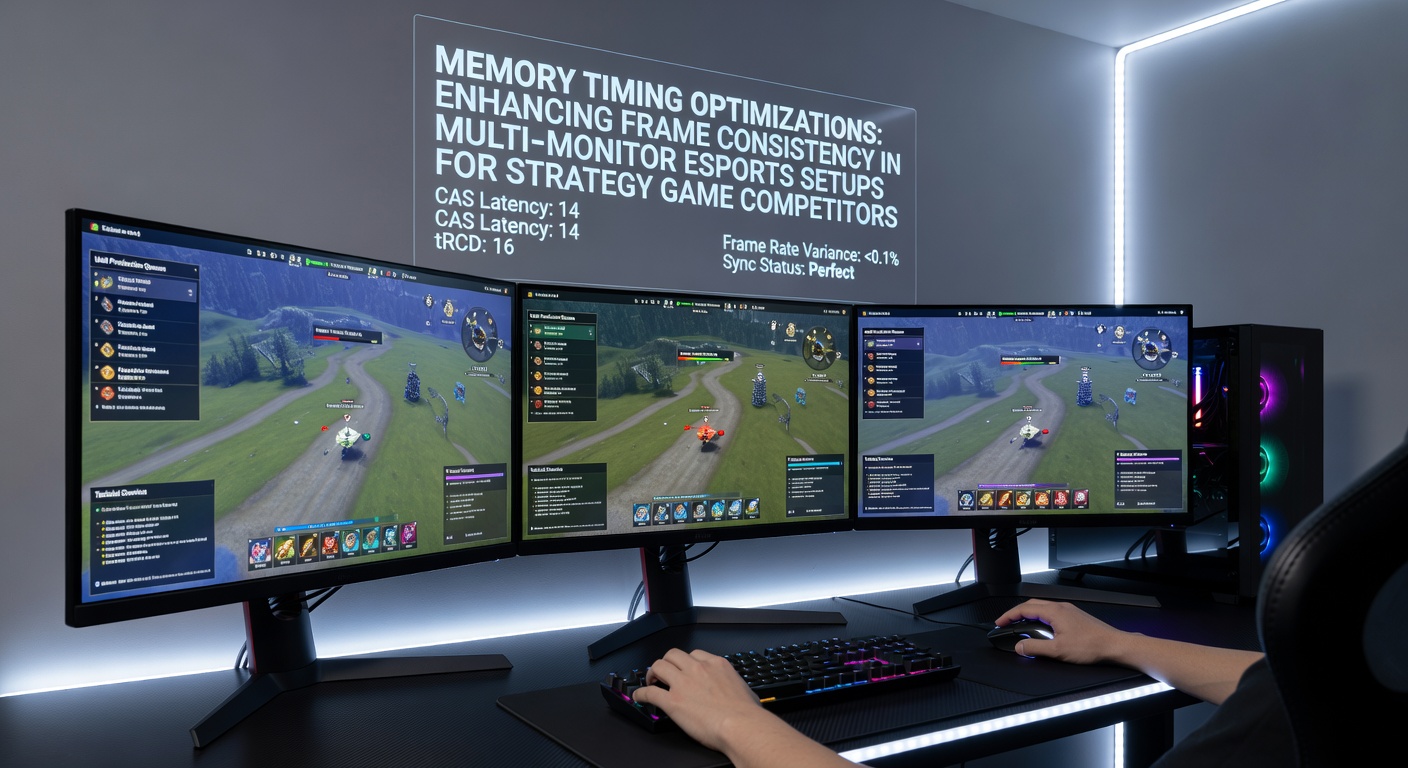
Competitors in strategy esports titles rely on multi-monitor configurations to maintain visibility across expansive maps, resource panels, and chat overlays, where frame consistency directly influences decision-making speed during high-pressure matches. Memory timing optimizations address variations in frame delivery by adjusting parameters such as CAS latency, tRCD, and tRP values in system RAM, which reduces latency spikes that occur when multiple displays pull data simultaneously from shared memory pools. Research from institutions like the University of Waterloo indicates these tweaks stabilize frame times in titles requiring constant asset streaming, such as real-time strategy simulations.
Core Mechanics of Memory Timings in Gaming Hardware
Primary timings govern how quickly memory modules respond to read and write requests, while secondary and tertiary values influence command scheduling and refresh intervals that become critical under sustained loads from dual or triple monitor arrays. Data from hardware validation tests shows that tightening these parameters within stability thresholds can lower average frame time deviations by measurable margins, particularly when graphics cards render separate viewports without introducing micro-stutters. Observers note that competitors often pair these adjustments with XMP or EXPO profiles that have been manually refined beyond manufacturer defaults.
Strategy game engines frequently access large texture atlases and pathfinding data structures during active play, and multi-monitor output amplifies memory bandwidth demands because each display controller maintains independent frame buffers. When timings remain loose, queue delays compound across monitors and produce inconsistent delivery rates that manifest as subtle judder during rapid camera movements or unit selections. Studies conducted by Canadian research groups have documented these patterns through frame capture analysis tools deployed in controlled tournament environments.
Challenges Specific to Multi-Monitor Esports Configurations
Setup complexity increases when competitors run three or more panels at high refresh rates, as synchronization protocols must align with memory access patterns that differ from single-display scenarios. Frame consistency suffers when memory requests collide during simultaneous updates to minimaps, unit lists, and main viewports, creating brief periods where one monitor lags behind the others. Figures from industry benchmarks reveal that unoptimized systems exhibit higher variance in frame pacing metrics compared to those with tuned timings, especially during late-game scenarios involving hundreds of on-screen entities.
Optimization Techniques and Validation Methods
Technicians begin by testing baseline stability with tools that stress memory subsystems while monitoring frame delivery across all connected displays, then incrementally reduce timing values while verifying error-free operation through extended stress sessions. This process incorporates voltage adjustments and command rate modifications that allow tighter primary timings without triggering system instability during prolonged matches. Those who have examined these configurations report that successful optimizations often require iterative testing across different game patches, since engine updates can alter memory access patterns in unexpected ways.
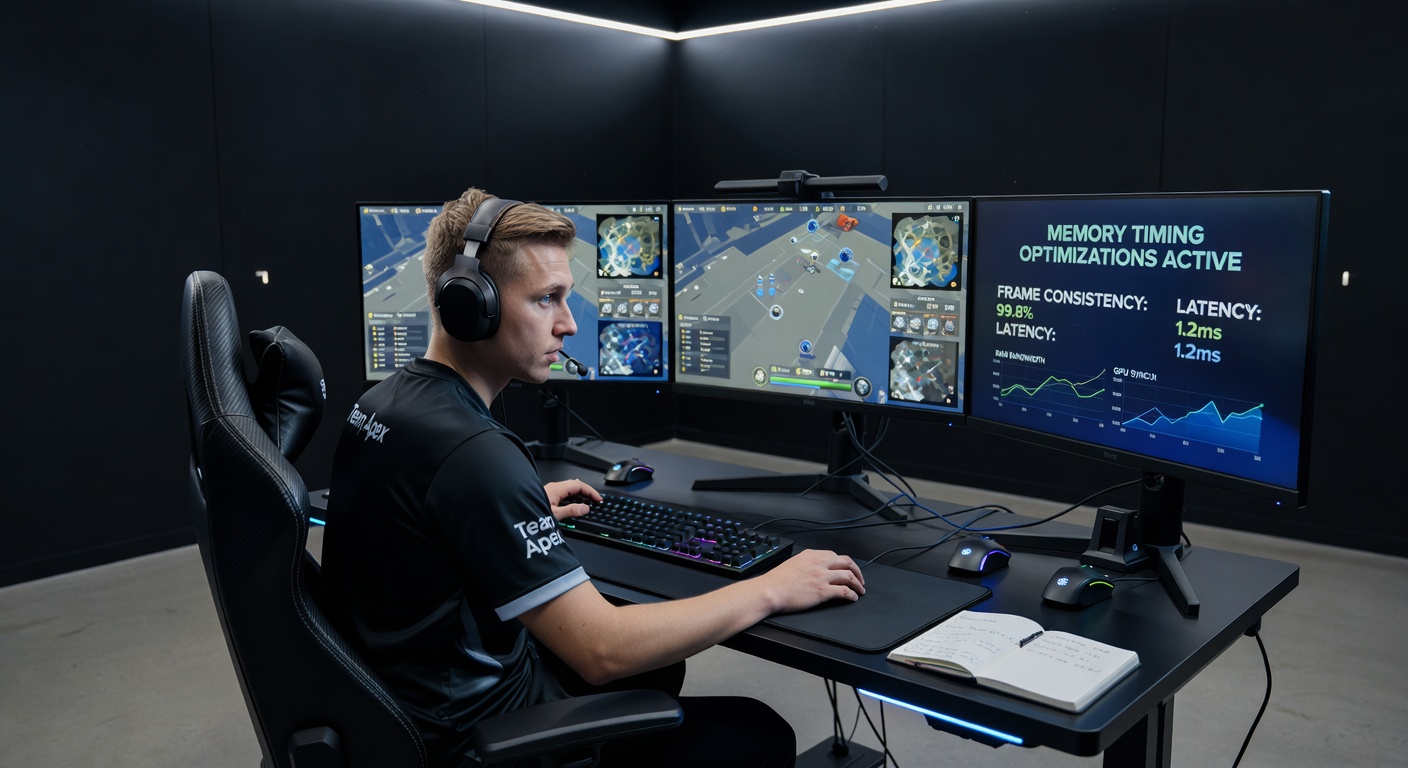
Software utilities provide real-time readouts of memory performance counters that correlate directly with observed frame time graphs, enabling precise identification of bottlenecks introduced by loose timings. Competitors integrate these optimizations into standard pre-tournament checklists alongside graphics driver updates and operating system tweaks that further support consistent data flow between CPU caches and system RAM. As of June 2026, several regional esports circuits have begun recommending hardware validation protocols that include memory timing verification as part of equipment certification procedures.
Impact on Strategy Game Performance Metrics
Frame time consistency improvements translate into more predictable input response across all monitors, which proves essential in games where players issue commands while simultaneously monitoring peripheral information on secondary displays. Quantitative assessments conducted by European gaming technology centers demonstrate reduced standard deviation in frame intervals when memory timings receive targeted optimization, leading to smoother visual feedback during critical decision windows. These gains remain measurable even when overall average frame rates stay constant, highlighting the distinction between peak performance and sustained consistency under tournament conditions.
Additional refinements involve aligning memory frequency with infinity fabric or interconnect speeds in modern platforms, which minimizes cross-component latency that otherwise disrupts synchronized rendering across multiple outputs. Observers have tracked these effects through longitudinal data collection at major events, where players using optimized memory configurations maintained steadier frame pacing during extended series.
Conclusion
Memory timing optimizations represent a targeted hardware adjustment that supports frame consistency requirements in multi-monitor strategy esports environments. Evidence from academic and industry sources continues to guide implementation practices, while evolving tournament standards in 2026 reflect growing recognition of these techniques. Continued validation across hardware platforms ensures competitors can maintain reliable visual performance without introducing instability risks.