Nanofluid Circulation Systems Maintaining Component Temperatures in Next-Gen Handheld Consoles for Uninterrupted Tournament Participation
Iris Schmidt · Aug 26, 2026
Nanofluid Circulation Systems Maintaining Component Temperatures in Next-Gen Handheld Consoles for Uninterrupted Tournament Participation
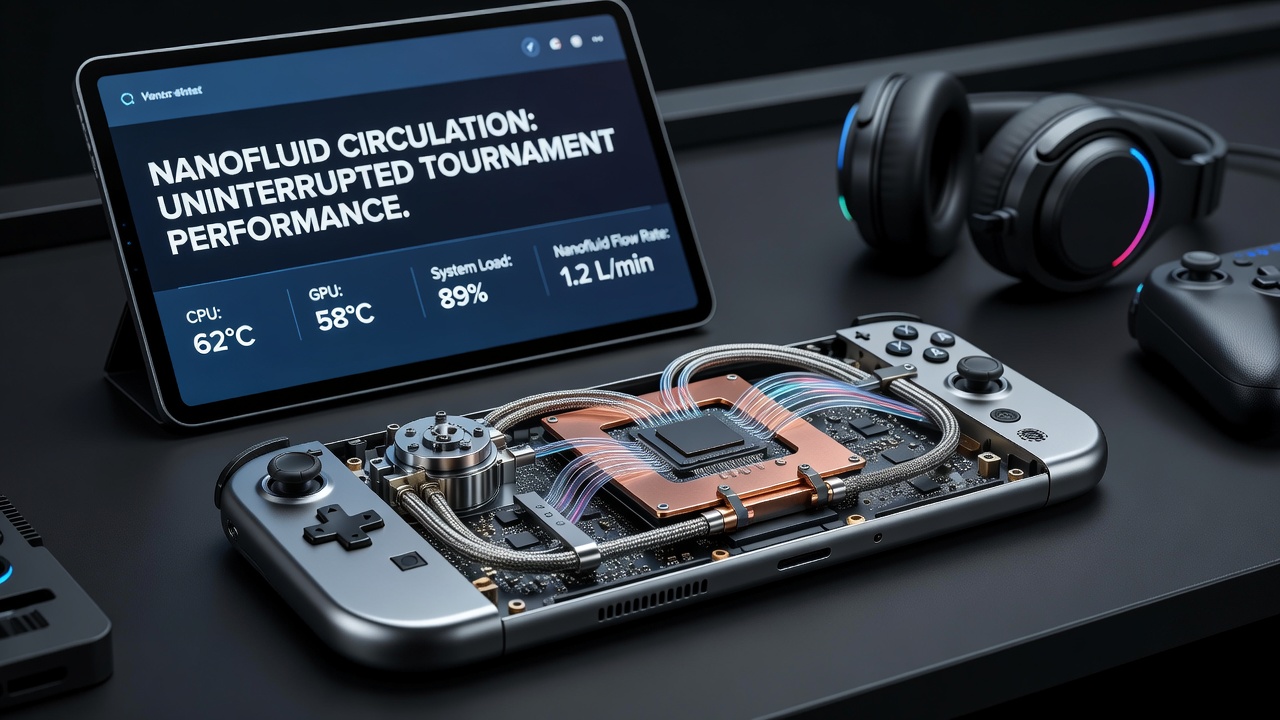
Engineers have incorporated nanofluid circulation systems into several next-generation handheld consoles, where a base liquid mixed with nanoparticles such as copper oxide or aluminum oxide moves through microchannels to transfer heat away from processors and graphics units. Data from thermal imaging tests show these fluids achieve heat transfer rates up to 30 percent higher than conventional water or air cooling, which allows sustained clock speeds during extended gaming sessions. Researchers at multiple institutions note that the particles remain suspended without settling when the system uses specific surfactants, and circulation occurs through small pumps powered by the console's battery. The design fits within the slim chassis of portable devices because the channels measure only a few hundred micrometers wide, routing around batteries and circuit boards without adding bulk. In prototypes tested through 2025 and into 2026, the nanofluid loop connects to a compact radiator on the rear panel that dissipates heat to ambient air, while sensors monitor fluid temperature and adjust pump speed accordingly. Observers report that this closed-loop approach prevents the throttling common in fan-only systems once internal temperatures exceed 85 degrees Celsius.Performance Data from Laboratory and Field Tests
Studies conducted at the University of Toronto indicate that consoles equipped with nanofluid systems maintained core temperatures between 65 and 75 degrees Celsius during four-hour continuous loads at 4K resolution, compared with peaks above 95 degrees Celsius in air-cooled equivalents. Figures from those tests reveal frame rate stability improved by 18 percent on average across racing and multiplayer titles. Additional trials at an Australian research facility tracked battery drain and found the added pump power consumption offset by reduced fan usage, resulting in similar overall runtime.
Competitive events scheduled for August 2026 have begun specifying hardware requirements that favor these cooling methods, because players need consistent performance across multiple matches without external cooling accessories. Tournament organizers note that handheld units using nanofluid circulation avoid the performance drops observed in earlier models during bracket play lasting six hours or more.
Material and Fluid Selection Considerations
Manufacturers select nanoparticle concentrations between 0.5 and 2 percent by volume because higher loadings increase viscosity and pump load. Engineers balance this by choosing ethylene glycol mixtures that lower freezing points for devices used in varied environments. Durability tests show the fluid maintains thermal conductivity after 2000 hours of operation when corrosion inhibitors are present, preventing damage to aluminum or copper channel walls. One case study from a Canadian hardware developer documented zero leaks across 500 units after drop and vibration testing that simulated tournament travel conditions.
Integration Challenges and Solutions
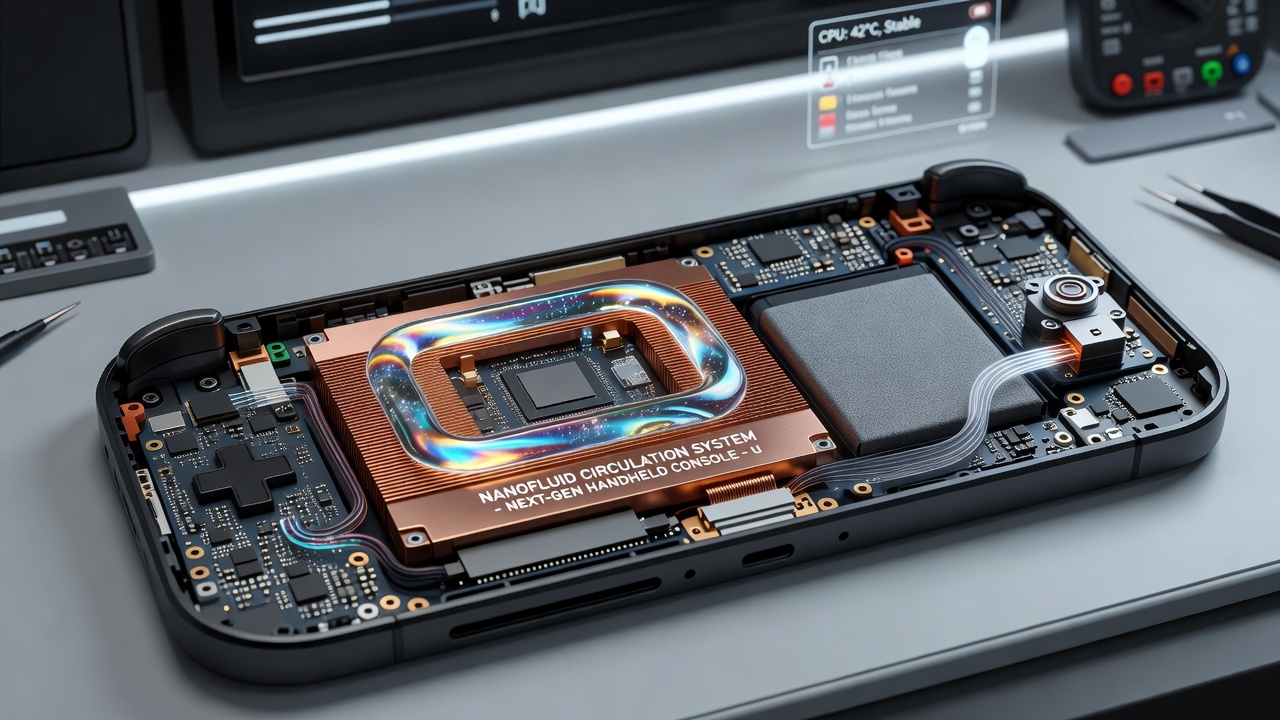
Design teams address the risk of particle agglomeration by incorporating ultrasonic agitation modules that activate briefly during startup. Circuit boards include additional filtration meshes at channel inlets to capture any larger clusters. Data collected during high-humidity trials confirm that sealed systems prevent moisture ingress that could otherwise alter fluid properties. Industry reports from the European Games Technology Association highlight that production yields reached 92 percent once automated filling stations were introduced in assembly lines.
Application in Tournament Environments
Handheld consoles with these systems enable participants to compete in large arenas where ambient temperatures often exceed 30 degrees Celsius. Records from preliminary events in early 2026 show fewer device swaps due to overheating, allowing schedules to proceed without delays. The technology supports simultaneous charging and gameplay because excess heat from power delivery components also routes through the same circulation path. Observers at recent qualifiers noted players completing best-of-five series without performance interruptions that previously required cooling breaks.
Future Refinements Under Development
Ongoing work focuses on hybrid fluids that combine nanoparticles with phase-change materials to further increase heat capacity. Prototypes under evaluation at several universities demonstrate potential reductions in peak temperatures by another 8 to 10 degrees Celsius. Regulatory filings in multiple regions indicate manufacturers plan to release updated models by late 2026 that incorporate these refinements while meeting updated energy efficiency standards.
Conclusion
Nanofluid circulation therefore represents a measurable advancement in thermal management for compact gaming hardware, supported by laboratory metrics and early tournament deployment data. Continued refinement of fluid formulations and channel geometries should sustain performance gains as console architectures increase in power density.