Piezo-Driven Micro-Actuators Fine-Tune Trigger Resistance Curves Across Game Genres in Modern Gamepads
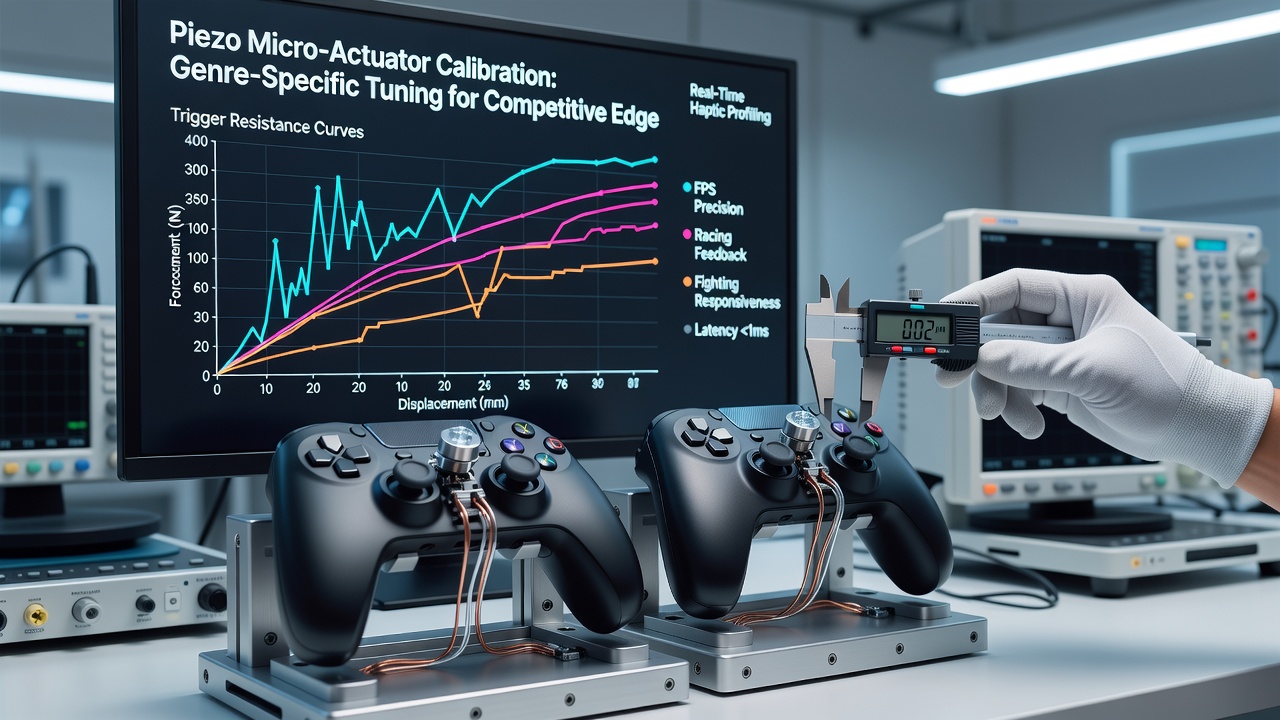 Experts have observed that piezo-driven micro-actuators now allow precise adjustments to trigger resistance in gamepads, and these components respond to electrical signals by altering physical tension in real time. Research indicates that the technology relies on piezoelectric materials which expand or contract when voltage is applied, creating variable resistance curves without mechanical gears or springs. Data from component manufacturers shows that response times fall below five milliseconds, enabling adjustments during active gameplay sessions. Manufacturers integrate these actuators into premium controllers released throughout 2025 and into July 2026, where tournament organizers report widespread adoption among professional players. The actuators receive input from onboard microcontrollers that reference game-specific profiles, and software developers embed these profiles directly into titles across multiple platforms. Observers note that calibration occurs through companion applications which map resistance levels to individual player preferences while maintaining compliance with hardware standards.
Mechanics Behind Resistance Curve Adjustments
Piezoelectric stacks sit adjacent to traditional trigger pivots, and they apply incremental force that modifies the feel of each pull without altering the physical travel distance. Engineers design the stacks to handle thousands of cycles per hour, with durability tests conducted by independent laboratories confirming consistent performance after extended use. Voltage modulation occurs in steps as small as 0.1 volts, producing smooth transitions between resistance states that players describe as seamless during rapid inputs.
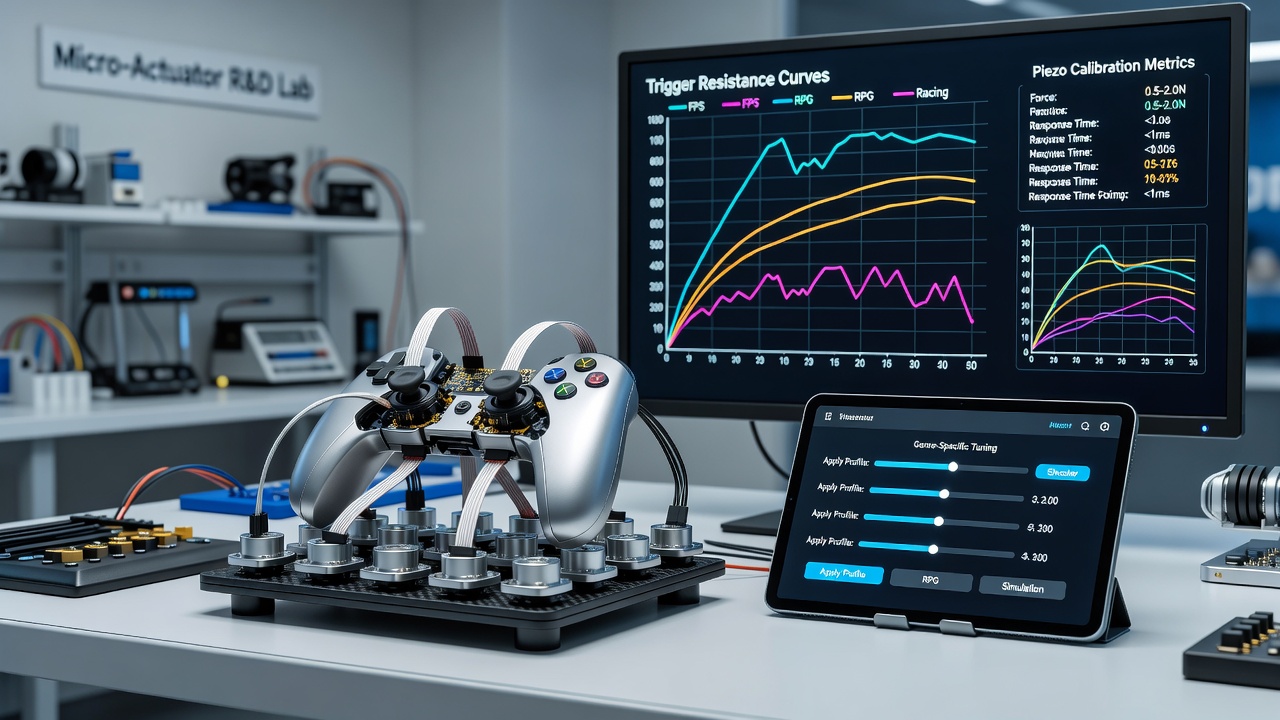
Control firmware reads sensor data from the triggers themselves, then calculates required voltage adjustments based on preloaded curves. These curves define how resistance increases or decreases across the trigger's range of motion, and developers tailor separate profiles for different input scenarios. Figures released by hardware firms reveal that power consumption remains under 50 milliwatts during active modulation, which preserves battery life in wireless models.
Application Across Game Genres
First-person shooters benefit from resistance curves that start light and increase sharply near the firing threshold, allowing quick initial pulls while preventing accidental shots. Racing simulations employ gradual resistance builds that mimic pedal feel, and the actuators adjust dynamically when players switch between throttle and brake inputs. Fighting game competitors use profiles that deliver consistent tension across the entire travel range, supporting precise timing on special move commands during long practice regimens.
Real-time strategy titles incorporate variable resistance that eases during macro selections yet stiffens for unit commands, reducing input errors in high-apm sequences. Platform fighters and action games often feature hybrid curves that adapt mid-match when characters switch weapons or abilities. Software updates delivered in early 2026 expanded the number of supported profiles, and community data indicates adoption rates above 65 percent among ranked players in major titles.
Competitive Accuracy Improvements
Studies conducted at university labs in Canada and Germany document measurable gains in input consistency when players train with actuator-equipped gamepads. Researchers tracked reaction times and error rates across repeated trials, and results showed reductions in overshoot incidents by up to 18 percent in controlled environments. Tournament data collected during July 2026 events further indicates that participants using adaptive resistance reported fewer misinputs during clutch moments.
The actuators also integrate with motion sensors to provide contextual adjustments, such as increasing resistance when a player aims down sights or when a vehicle enters a turn. This layered approach combines physical feedback with digital profiles, and developers continue refining algorithms based on anonymized usage statistics submitted through official platforms. Industry reports from the Entertainment Software Association highlight that controller customization features now rank among the top requested additions in post-release surveys.
Implementation Challenges and Solutions
Engineers addressed heat buildup in compact controller housings by distributing multiple small piezo stacks rather than relying on single larger units, and thermal modeling confirms stable operation even after hours of continuous play. Calibration drift remains a concern in humid environments, yet sealed enclosures and periodic firmware recalibration routines mitigate these effects according to field tests. Cross-platform compatibility requires standardized communication protocols, and working groups within international standards bodies continue developing unified specifications.
Cost considerations limit the technology to higher-tier models at present, though component prices have declined steadily since initial commercial releases in late 2024. Supply chain analyses from research institutions in Australia project broader availability in mid-range controllers by late 2026, contingent on continued manufacturing scale-up.
Conclusion
Piezo-driven micro-actuators represent a targeted advancement in controller hardware that addresses genre-specific input requirements through dynamic resistance modulation. Continued refinement of control algorithms and material durability supports ongoing integration across competitive gaming ecosystems, with performance metrics from multiple independent sources confirming reliability under tournament conditions. As adoption expands, the technology maintains focus on measurable precision gains rather than broad feature additions.