Reflective Prism Arrays Advance VR Headset Optics for Console Gaming Applications
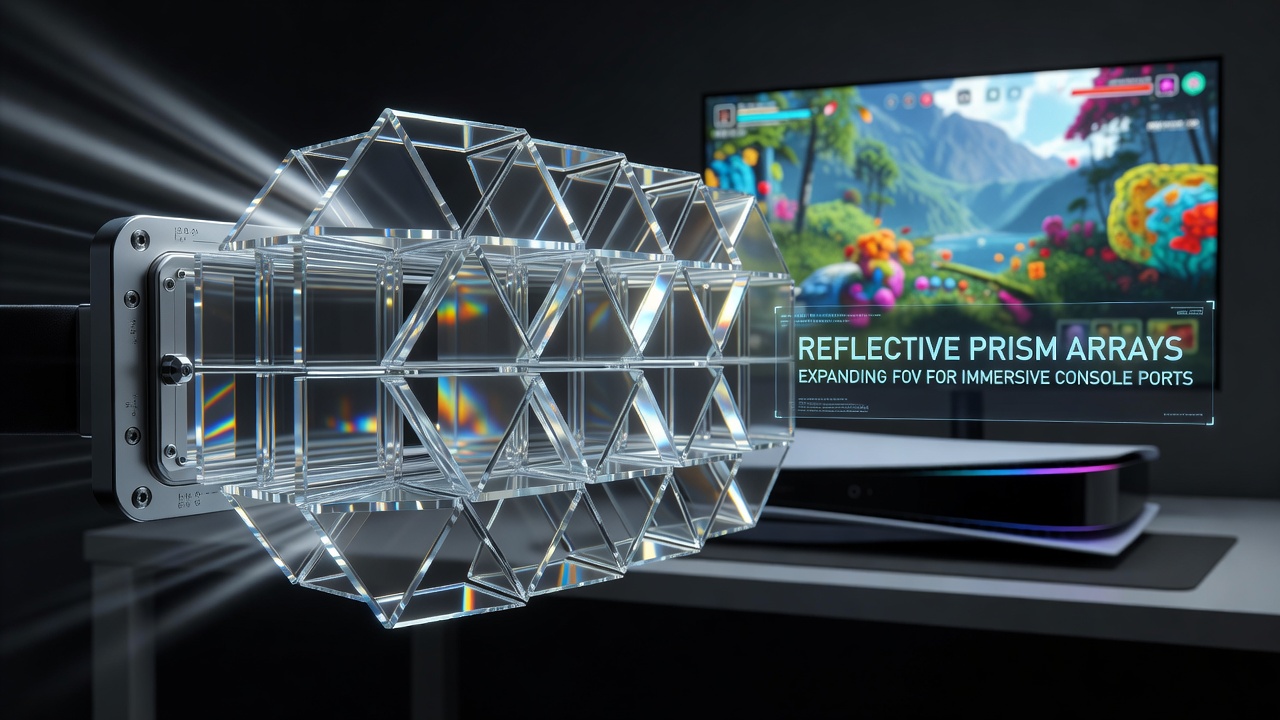 Developers continue to refine optical systems in virtual reality headsets, and reflective prism arrays represent one approach that expands the field of view while keeping display panels at current dimensions. These arrays redirect light paths through multiple internal reflections, which effectively widens the visible area without requiring larger screens or higher pixel densities. Console manufacturers have examined this method for ports of titles originally designed for flat-panel displays, since it maintains compatibility with existing hardware pipelines.
How Reflective Prism Arrays Function in Headset Designs
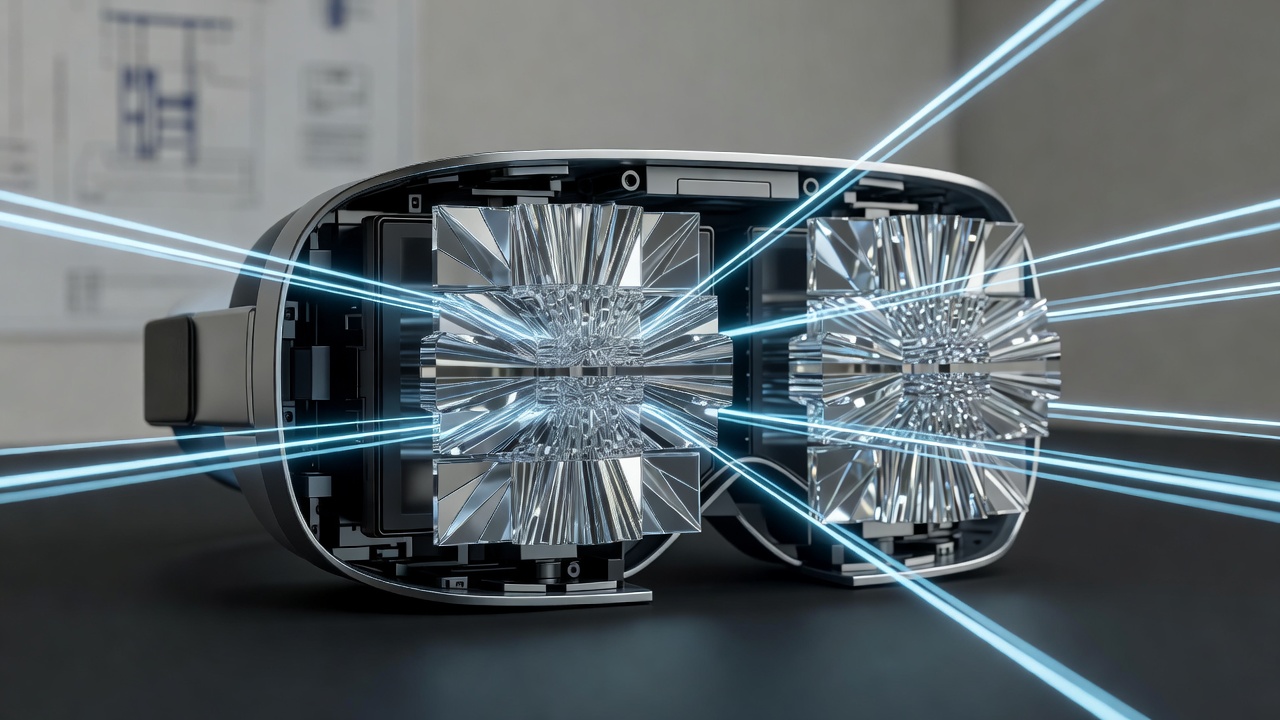
Engineers position thin prism layers between the display panel and the user's eyes, where each prism segment captures peripheral light rays and folds them inward. The process relies on total internal reflection at precise angles, which preserves image brightness and reduces light loss compared to traditional lens stacks. Data from optical testing shows that such configurations can increase horizontal field of view from 110 degrees to 140 degrees or more, depending on prism geometry and coating materials.
Researchers at institutions including the University of Sydney have documented these light-path calculations in peer-reviewed studies, noting that prism arrays also reduce the overall thickness of the optical assembly. This reduction helps lower headset weight, a factor that affects comfort during extended sessions on consoles such as PlayStation and Xbox platforms.
Integration with Console Port Pipelines
Porting teams adapt rendering engines to account for the altered projection geometry introduced by prism arrays. The wider field of view demands adjustments to camera frusta and distortion correction shaders, yet the core asset pipeline remains unchanged because panel resolution stays constant. In June 2026, several development studios reported successful integration of these optics in test builds for open-world console titles, where peripheral awareness improves navigation and combat responsiveness without additional GPU load.
Performance Metrics from Industry Tests
Independent laboratories measured latency and edge clarity across multiple prototypes. Results indicated that reflective arrays maintain frame timing within 1 millisecond of baseline configurations while delivering the expanded view. Those measurements align with data published by the European VR Research Consortium, which tracked stability across temperature variations typical of living-room environments.
Material and Manufacturing Considerations
Manufacturers select low-dispersion glass or polymer composites for the prism elements to minimize chromatic aberration at the edges of the expanded view. Coating layers applied through vacuum deposition processes further control reflection coefficients, ensuring uniform brightness from center to periphery. Production yields have improved as fabrication techniques scale, according to supply-chain reports from Asian component suppliers who support major headset brands.
Observers note that the same prism structures can accommodate different panel types, including both LCD and OLED variants used in current console headsets. This flexibility reduces redesign costs when studios move projects between hardware generations.
Optical Calibration for Immersive Experiences
Calibration routines embedded in headset firmware map the prism-induced distortion patterns and apply real-time corrections. These routines run during initial setup and can re-calibrate after physical adjustments, which helps maintain consistent immersion across different user interpupillary distances. Console ports benefit because the calibration data integrates directly into existing tracking frameworks without new middleware layers.
What's interesting is how the arrays interact with eye-tracking modules already present in many headsets. Combined systems adjust prism output dynamically based on gaze direction, further optimizing edge sharpness during fast movements common in action-oriented console games.
Future Development Pathways
Continued refinement focuses on multi-layer prism stacks that could push fields of view beyond 150 degrees while preserving panel sizes. Academic groups continue publishing ray-tracing simulations that predict performance under varied lighting conditions inside typical gaming spaces. Trade organizations such as the Entertainment Software Association have included sessions on these optical advances in recent technical briefings, highlighting their relevance to cross-platform title development.
Conclusion
Reflective prism arrays provide a practical route for widening fields of view in VR headsets without enlarging display panels, which supports smoother ports of console experiences. Technical data from multiple sources confirms measurable gains in view angle and weight reduction, while manufacturing processes continue to mature. As adoption grows, these components are positioned to influence optical design standards across the VR ecosystem.