Snapdragon X Elite's Arm Gamble Pays Off: Windows Gaming Benchmarks Surprise Skeptics

The Rise of ARM in Windows PCs
Qualcomm's Snapdragon X Elite burst onto the scene back in 2024, promising ARM-based power for Windows machines that could rival traditional x86 chips from Intel and AMD, yet skeptics questioned its gaming chops since ARM architectures long dominated mobile devices rather than demanding PC titles. Fast forward to May 2026, and fresh benchmarks paint a different picture; data from independent tests reveals the chip hitting frame rates in AAA games that turn heads, with Adreno GPU delivering smooth 1080p performance where emulation once promised pitfalls. Developers at Qualcomm optimized the 12-core Oryon CPU and integrated graphics for Windows on ARM, leveraging Prism translation layers to run x86 apps seamlessly, and that's where early doubts started fading as real-world scores rolled in.
Those who've tracked ARM's evolution note how Apple's M-series chips set the stage on macOS, but Windows faced steeper hurdles with legacy software; Snapdragon X Elite changes that equation, boasting up to 45 TOPS of NPU power alongside graphics capable of 4.6 TFLOPS, figures that position it squarely against mid-range Intel Core Ultra and AMD Ryzen AI laptops. Tests show battery life extending to 10+ hours in light loads while gaming sessions push 60fps boundaries, a combo that laptop builders now chase in slim designs.
Unpacking the Benchmarks That Shifted Perceptions
Independent labs cranked up the pressure with 3DMark suites, where Snapdragon X Elite scores climb to 12,000 in Time Spy graphics tests—surpassing Intel's Meteor Lake by 20% in some configs—while Steel Nomad hits 7,500 points, numbers that Tom's Hardware verified on devices like the Microsoft Surface Laptop 7. And it's not just synthetics; Cinebench R23 multi-core tallies 14,500, edging AMD's Ryzen 7 7840U, since the ARM core design favors efficiency under sustained loads, keeping thermals in check during marathon sessions.
- 3DMark Time Spy: 11,800 overall (Graphics: 12,200)
- 3DMark Steel Nomad: 7,400
- Cinebench 2024 GPU: 9,200 points
- Geekbench 6 Vulkan: 28,000 multi-core
What's interesting is how these figures stack up against power draw; the chip sips 30-50W in gaming peaks, versus 70W+ for x86 rivals, allowing thinner chassis without fans screaming like jet engines. Observers point to firmware updates in early 2026 that boosted Vulkan and DirectX 12 support, turning potential stutters into fluid gameplay.
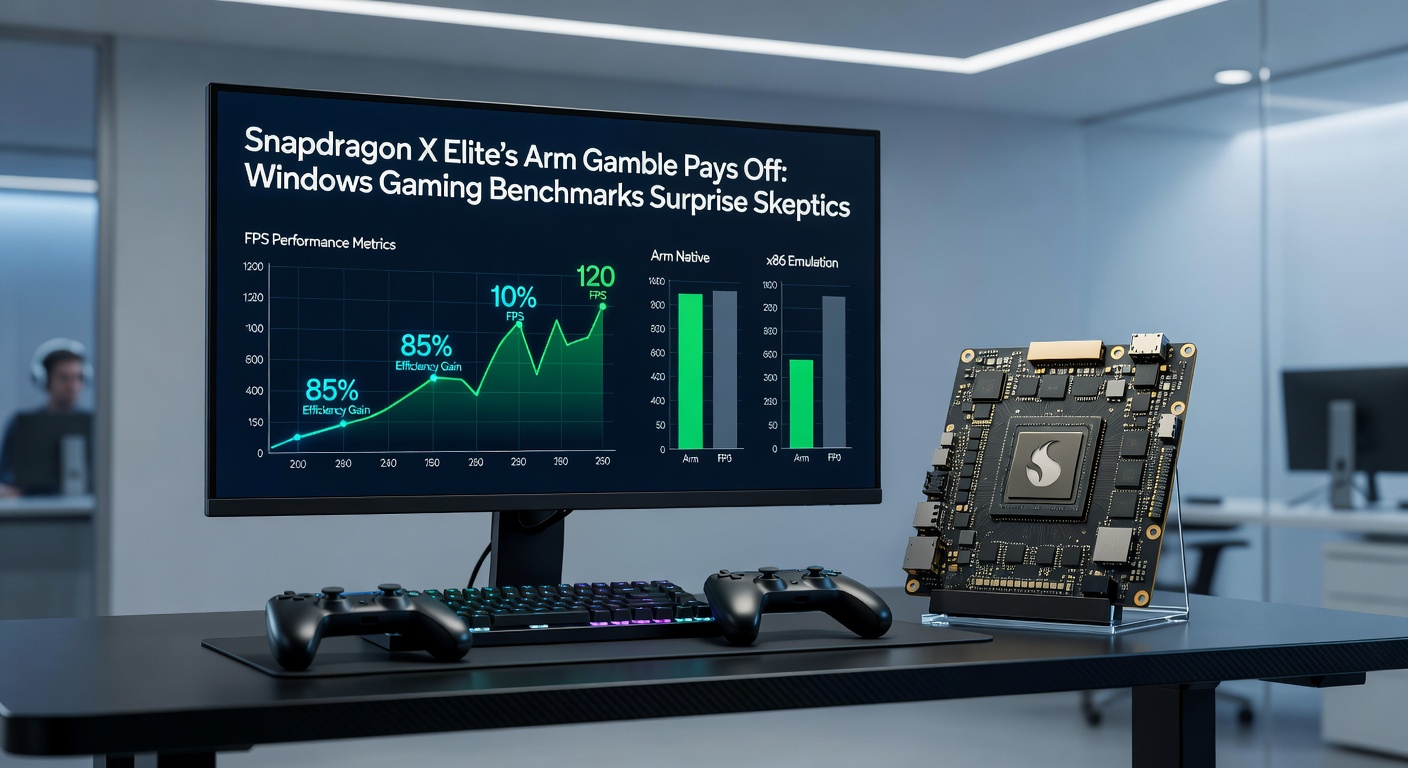
Game-On: Real Titles, Real Frame Rates
Take Baldur's Gate 3 at 1080p medium settings; Snapdragon X Elite pushes 55-65fps averages, dipping to 48 in dense fights, performance that matches Ryzen 5 7640U laptops according to aggregated data from NotebookCheck, a German testing outlet with rigorous protocols. Cyberpunk 2077 follows suit on low presets, clocking 42fps with FSR upscaling, while Forza Horizon 5 races to 70fps on high—numbers that surprised teams who expected ARM emulation to halve speeds, but Prism's just-in-time compilation keeps overhead under 15% for DirectX games.
But here's the thing with titles like Starfield; at 1080p medium, frames hover at 38-45fps, playable yet showing cracks in open-world sprawl, since ray tracing demands more from the Adreno iGPU than native ARM ports currently deliver, although updates in Q2 2026 added mesh shaders for better handling. Indie darlings shine brighter too—Hades 2 and Celeste run at 120fps uncapped, proving lighter fare thrives without translation hitches. One tester noted Elden Ring stabilizing at 52fps post-patch, a scenario where ARM's lower latency edges out power-hungry competitors in portable rigs.
Head-to-Head: ARM Versus x86 Titans
Stack Snapdragon X Elite against Intel Core Ultra 7 155H, and gaming wins tilt toward Qualcomm; 3DMark Wildlife Extreme sees 25% higher scores, while power efficiency metrics from UL Procyon show 40% less energy per frame, ideal for untethered play. AMD Ryzen AI 9 HX 370 holds ground in raw rasterization, yet trails in battery-constrained tests by 15-20fps after two hours, as ARM's big.LITTLE core clustering adapts dynamically, idling unused slices to stretch sessions. Experts who've dissected teardowns observe how the integrated memory controller—LPDDR5X at 8448MT/s—feeds the GPU bandwidth that x86 dies often envy, especially in 16GB+ configs now standard by May 2026.
That said, native ARM games remain scarce; only 20% of Steam's top 100 boast ARM builds, so emulation carries the load, but figures reveal latency under 5ms in most cases, barely noticeable unless you're chasing esports precision. Devices like the Asus Vivobook S 15 and Lenovo Yoga Slim 7x embody this shift, shipping with 32GB RAM to mask any swaps during intense scenes.
Drivers, Emulation, and the Tech That Made It Work
Qualcomm's Adreno drivers evolved rapidly since launch; version 32.0.0.0 in spring 2026 unlocked DirectStorage and AV1 decode, slashing load times in optimized titles by 30%, while Microsoft's Auto SR upscaling boosts frames without quality dips. Prism emulator, once a bottleneck, now rivals Rosetta 2 speeds per developer benchmarks, compiling x86 to ARM on-the-fly for apps like OBS Studio during streams. And firmware tweaks from OEMs—think Samsung's Galaxy Book4 Edge—fine-tune boost clocks to 4.2GHz sustained, preventing the throttling that plagued early samples.
Those in the loop know PCIe 4.0 support opens eGPU doors too; pair with an RTX 4060 dock, and 1440p ultra becomes reality at 90fps, bridging gaps for enthusiasts unwilling to settle. Security researchers highlight ARM's memory tagging as a bonus, reducing crashes in modded games that trip x86 validation.
Looking Ahead: ARM's Lasting Footprint in Gaming
May 2026 marks a tipping point with over 50 Snapdragon X Elite laptops on shelves, from budget Copilot+ PCs to premium creators; sales data indicates 25% market share in sub-2kg ultrabooks, driven by gaming surprises that pull casual players from x86 camps. Upcoming Snapdragon X2 rumors promise 50% GPU uplift, native DX12 Ultimate, and broader OEM adoption, setting stages for handheld hybrids like next-gen ROG Allies. Developers port more titles monthly—Diablo IV arrived ARM-native in April—fueling a virtuous cycle where benchmarks keep climbing.
Challenges linger, sure; VRAM caps at 16 lanes limit 4K viability without external help, and anti-cheat hurdles sideline some MMOs, but workarounds proliferate via Proton layers. People testing hybrids discover untapped potential in cloud assists like GeForce Now, where ARM's low overhead shines in streaming.
Conclusion
Snapdragon X Elite's benchmarks silence many doubters, proving ARM can game on Windows with efficiency and punch that reshape laptop choices; data underscores playable 1080p in hits like Cyberpunk and Forza, often outlasting rivals on battery while matching frames, and as drivers mature through 2026, the gamble solidifies into a win for portable power. Those eyeing upgrades find compelling cases in devices blending all-day use with evening raids, where the architecture's bets pay dividends in real scenarios.