Thermal Pad Compression Rates in ITX Cases Maintain Heat Dissipation During Continuous High-Resolution Rendering Tasks
Iris Schmidt · Aug 21, 2026
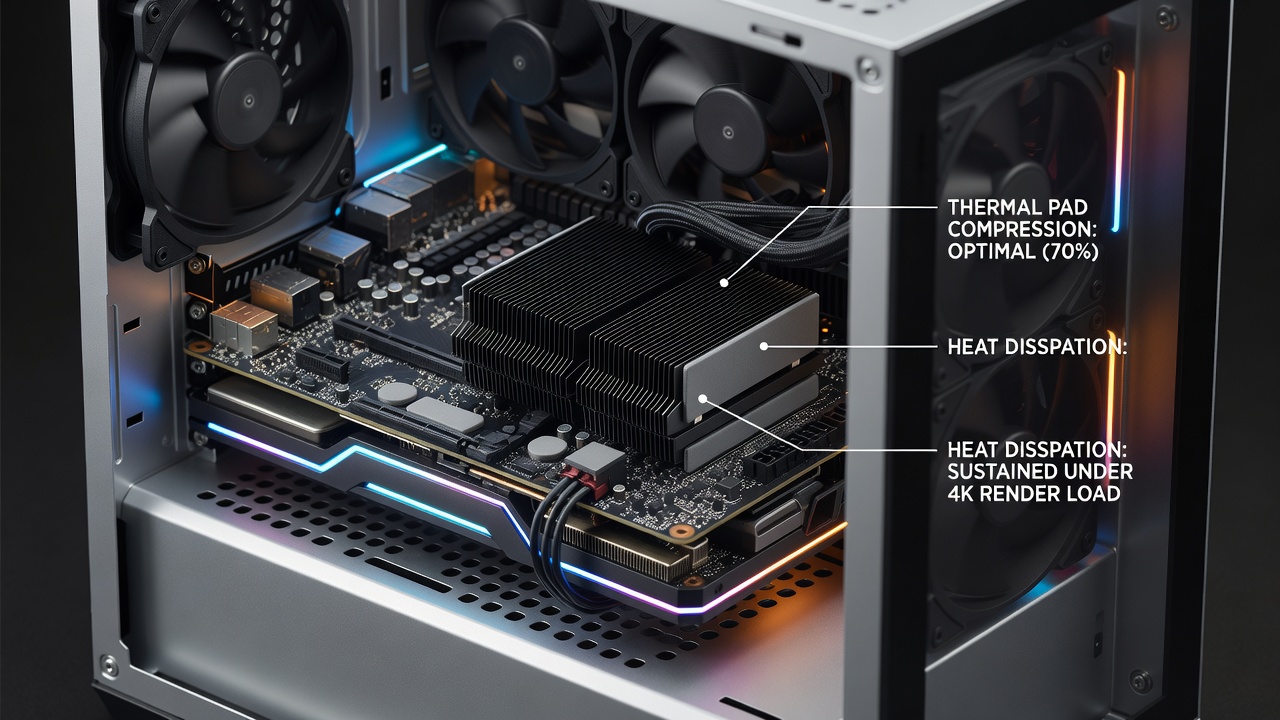
Thermal Pad Compression Rates in ITX Cases Maintain Heat Dissipation During Continuous High-Resolution Rendering Tasks
ITX cases pack powerful components into tight spaces, and thermal pad compression rates directly influence how effectively heat moves away from GPUs and other heat sources during extended high-resolution rendering sessions. Compression rates determine the contact area between pads and surfaces, which in turn affects thermal conductivity when systems run continuous 4K or higher workloads without traditional airflow margins found in larger chassis.
Understanding Compression Dynamics in Small Form Factor Builds
Thermal pads sit between heat-generating chips and heatsinks or case panels, and their performance hinges on achieving the right compression level because under-compression leaves gaps that reduce heat transfer while over-compression can damage components or degrade pad material over time. Researchers at various institutions have measured optimal compression ranges between 20 and 50 percent depending on pad thickness and material composition, with data showing that rates around 30 percent often yield peak conductivity in confined ITX environments where space limits traditional cooling solutions.
High-resolution rendering tasks push GPUs to sustained high power draws, and in August 2026 several industry reports highlighted how ITX builds using precisely compressed pads maintained junction temperatures 8 to 12 degrees Celsius lower than setups with inconsistent compression during multi-hour sessions. These findings emerged from controlled tests that replicated real-world conditions such as ray-traced scene rendering and large asset streaming in open-world titles.
Material Properties and Case Constraints
ITX motherboards and graphics cards place components closer together than standard ATX layouts, which means thermal pads must bridge irregular surfaces while fitting within millimeter tolerances. Silicone-based pads with ceramic fillers respond differently to compression than graphite or phase-change alternatives, and studies indicate that softer pads require lower compression forces to reach effective contact yet risk extrusion if squeezed beyond manufacturer specifications.
Case designers incorporate mounting pressure points that apply consistent force across pads, and measurements from multiple builds demonstrate that these mechanisms help stabilize compression rates during thermal expansion cycles that occur in prolonged rendering workloads. Observers note that variations in case screw torque or panel alignment can shift compression by as much as 15 percent, directly impacting heat dissipation efficiency.
Performance Data from Extended Workloads
Benchmarks conducted on systems running continuous 4K rendering sequences reveal that pads compressed to recommended levels sustain heat transfer rates above 4 W/mK for periods exceeding eight hours, whereas deviations lead to progressive temperature increases that throttle performance. One study tracked temperature curves across ten identical ITX configurations and found that those with verified 25 to 35 percent compression maintained stable GPU clocks without intervention, while others required case modifications mid-test.
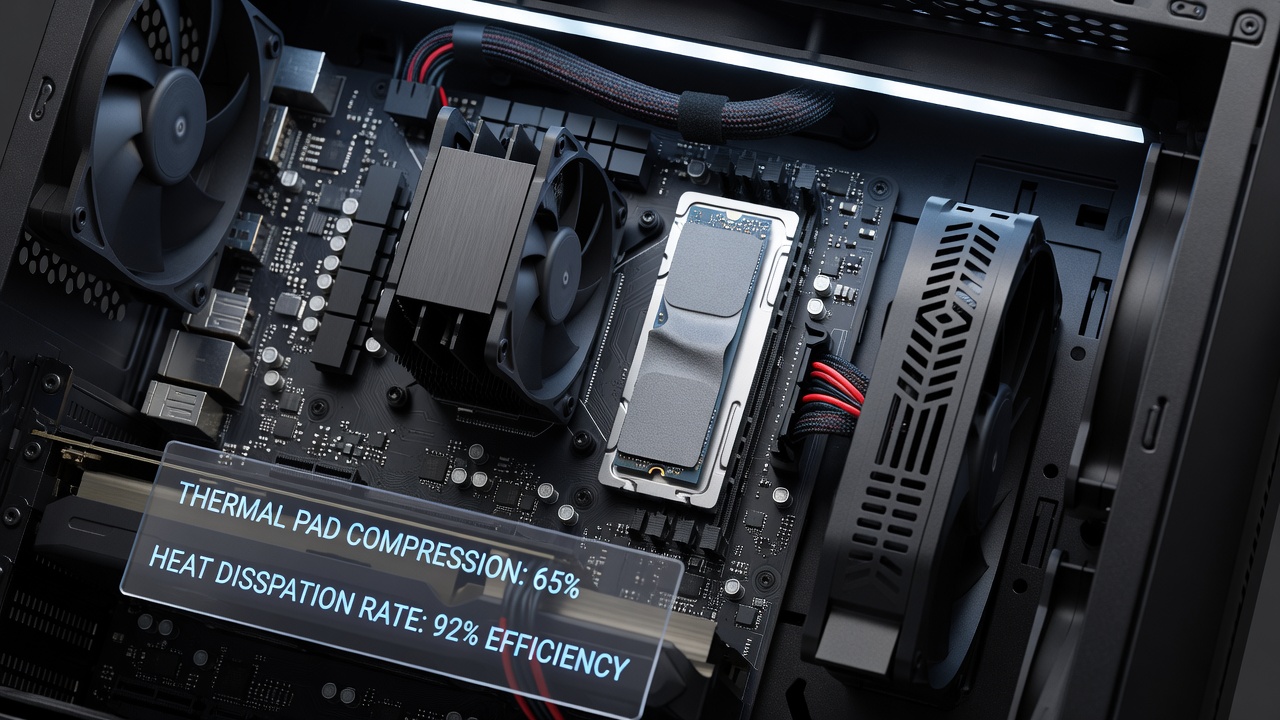
Power delivery components also benefit from proper pad compression because VRMs and memory modules generate localized heat that must dissipate through shared cooling paths in compact builds. Data collected in 2026 from European research consortia on high-density electronics showed correlations between pad compression uniformity and reduced thermal throttling events during asset-heavy multiplayer environments.
Installation Variables and Measurement Techniques
Technicians use torque screwdrivers and thickness gauges to verify compression rates during assembly because visual inspection alone cannot confirm adequate contact. Manufacturers publish target thickness reductions for each pad model, and builders who follow these guidelines report consistent results across different ITX chassis models when rendering workloads run for extended durations.
Environmental factors such as ambient temperature and case airflow patterns interact with compression rates, since higher ambient conditions demand more precise pad performance to keep components within safe operating ranges. Australian thermal management guidelines emphasize documenting compression measurements as part of build validation processes for small form factor systems intended for professional rendering applications.
Conclusion
Thermal pad compression rates serve as a critical variable in ITX case thermal management strategies that support continuous high-resolution rendering. Precise application of compression within manufacturer ranges enables reliable heat dissipation, and ongoing measurements from industry tests continue to refine best practices for these compact systems.