Variable Refresh Implementations Minimizing Visual Artifacts on Living Room Displays During Console Action Sequences
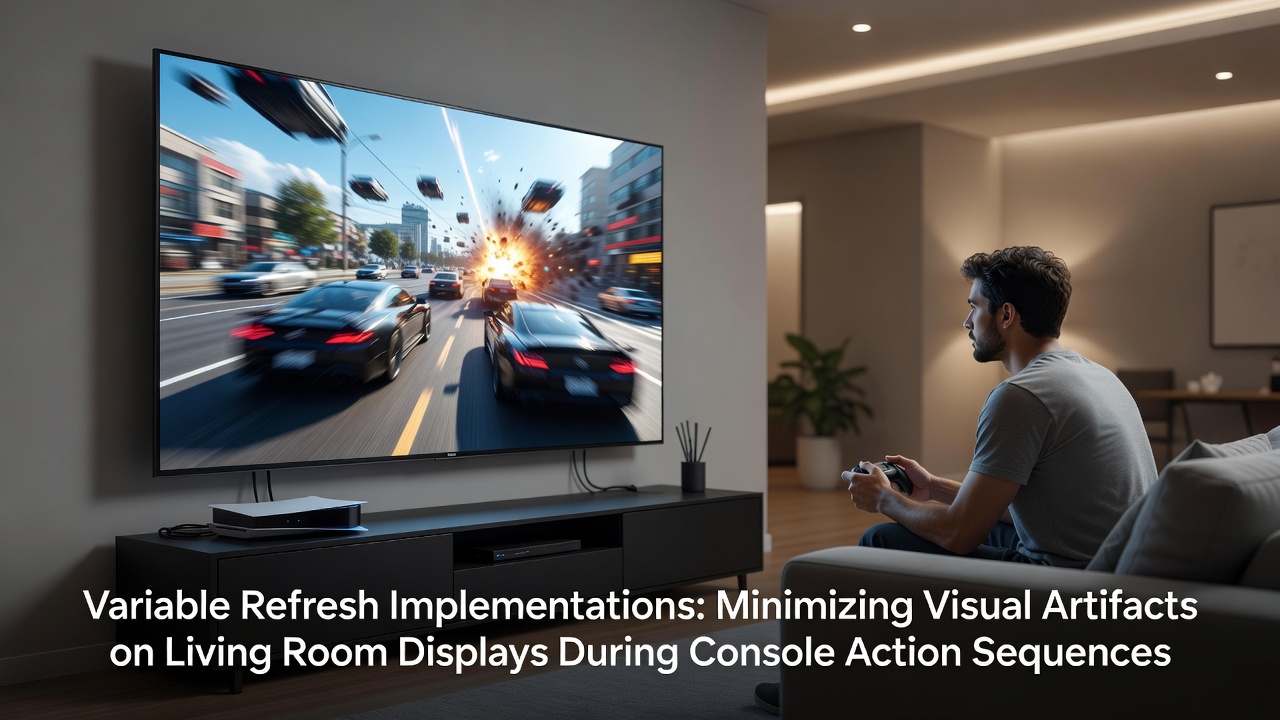
Variable refresh implementations have become central to console gaming on living room displays, where high-motion sequences in action titles often expose limitations in fixed refresh panels. These technologies adjust the display's refresh rate dynamically to match the console's frame output, which reduces common issues like screen tearing and stuttering that arise when frame rates fluctuate during intense gameplay moments. Research from display standards organizations shows that adaptive synchronization protocols align pixel updates more closely with rendered frames, creating smoother motion presentation across a range of console hardware including current-generation systems.
Core Mechanisms Behind Adaptive Synchronization
Adaptive synchronization operates by allowing the display to vary its refresh timing within a supported range, typically from 48Hz up to 120Hz or higher depending on the panel specifications. This approach differs from traditional fixed-rate displays that lock to 60Hz, where mismatched frame delivery creates visible artifacts. Data from industry testing indicates that protocols such as those defined by VESA and the HDMI Forum enable consoles to output frames at variable intervals without forcing the panel to repeat or skip content, which maintains temporal consistency. Observers note that these implementations rely on handshake signals between the console and display to negotiate timing parameters before gameplay begins, ensuring compatibility from the start of each session.
Console-Side Support and Implementation Details
Modern consoles integrate variable refresh capabilities through their video output pipelines, with both major platforms enabling the feature via system settings that activate HDMI Forum VRR or Adaptive-Sync signaling. When developers optimize titles for unlocked frame rates, the console transmits frames as they render rather than buffering to a fixed cadence, which allows the connected display to respond in real time. Figures from hardware validation labs reveal that this reduces input latency compared to traditional vsync methods, particularly in sequences involving rapid camera movements or particle effects common in action games. Those who have examined console firmware updates note incremental refinements to VRR handling that improve stability during extended play periods.
Display Technologies in Living Room Environments
Living room displays incorporate variable refresh through either native HDMI Forum VRR support or compatibility modes that work with external adapters in some cases. Panel manufacturers have expanded support across OLED and LCD models sold in recent years, with certification programs verifying artifact reduction under standardized test patterns. A study conducted by researchers at an Australian technical institute found measurable decreases in perceived judder when variable refresh operated within the console's typical frame rate envelope of 40 to 120 frames per second. These displays often combine VRR with other processing features such as low-latency modes, yet the synchronization layer remains the primary factor in minimizing tearing during unpredictable frame delivery.
Addressing Specific Visual Artifacts in Action Sequences
Screen tearing occurs when the display begins refreshing mid-frame, creating horizontal discontinuities that become pronounced in fast lateral movement typical of action gameplay. Variable refresh implementations eliminate this by completing each frame before initiating the next scan, according to documentation from standards bodies. Stuttering from frame rate drops receives similar treatment because the display waits for the incoming frame rather than repeating prior content, which preserves motion continuity. Research indicates that judder from mismatched 3:2 pulldown patterns also diminishes when the panel refreshes at the exact rate of the source material, a benefit that emerges clearly in console ports of cinematic action sequences.
Integration Challenges and Current Standards as of June 2026
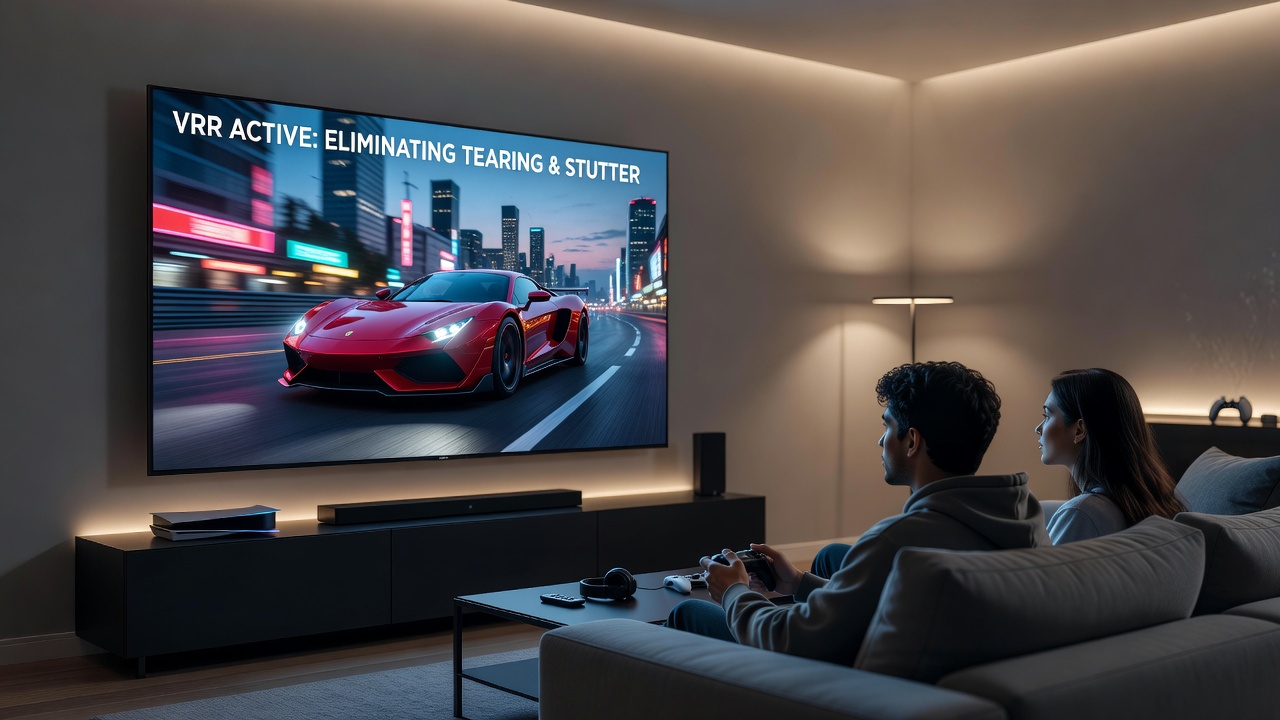
Implementation varies across display models because some panels support wider variable refresh ranges than others, which affects performance when consoles output frames outside the negotiated window. The HDMI Forum continues to refine its VRR specification, with updates rolled out in mid-2026 that clarify signaling for higher bandwidth connections used in 4K and 8K living room setups. European regulatory testing bodies have documented compliance rates across commercial displays, showing that certified models deliver consistent artifact reduction when paired with supported consoles. Those tracking adoption rates observe gradual expansion of native support in mid-range televisions, driven by console ecosystem requirements rather than isolated display innovation.
Performance Data from Validation Testing
Independent labs have quantified artifact reduction using high-speed cameras and observer panels during controlled action sequence playback. Results demonstrate that variable refresh configurations produce lower rates of visible tearing and motion discontinuity compared to fixed refresh baselines across multiple console titles. One analysis from a Canadian research group highlighted improvements in frame time consistency when displays operated in variable mode, particularly during load-heavy moments involving complex scene geometry. These measurements align with broader industry reports that track real-world console usage patterns in home environments.
Future Refinements in Synchronization Protocols
Ongoing work by standards organizations focuses on extending variable refresh ranges downward to accommodate lower frame rates without introducing flicker, which remains a consideration in darker living room viewing conditions. Console developers continue to refine output pipelines to maximize compatibility with the growing installed base of adaptive displays. Data collected through certification programs shows increasing numbers of titles shipping with VRR-aware rendering paths that further stabilize delivery during demanding sequences. Observers tracking these developments note that interoperability testing between new console revisions and display firmware remains a key factor in maintaining reliable performance.
Conclusion
Variable refresh implementations provide a technical foundation for smoother console gameplay on living room displays by aligning refresh timing with variable frame output. Standards from HDMI Forum and VESA have enabled widespread adoption, while testing from multiple regions confirms reductions in tearing, stuttering, and judder during action sequences. As console hardware and display panels continue to evolve through 2026 and beyond, these synchronization methods support more consistent visual presentation without requiring changes to game content itself.